
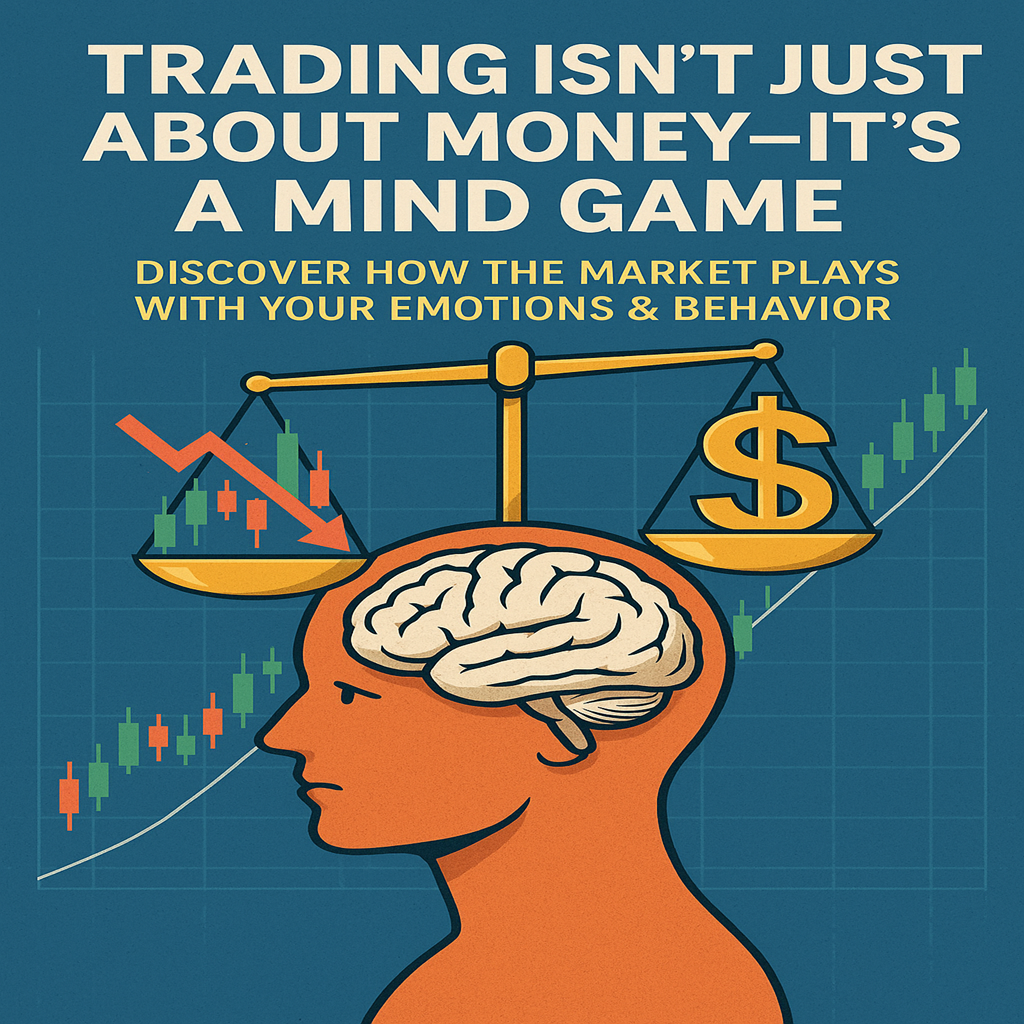
How Trading Affects the Human Mind: Trading Psychology
Trading is more than reading charts, tracking prices, or pursuing financial gains. It is also a psychological experience in which uncertainty, risk, anticipation, and loss can influence how people think and behave. A trader may understand a strategy intellectually yet struggle to follow it when fear, excitement, or frustration takes over. The psychological impact of trading can extend beyond individual decisions. Repeated emotional highs and lows may affect concentration, sleep, relationships, and general wellbeing. Understanding these patterns can help people recognise when emotions are influencing their judgement and when it may be time to pause.
1. The Psychology Behind Trading Decisions
Trading requires decisions under uncertain conditions. Unlike situations where effort reliably produces a predictable result, financial markets can move against even a carefully considered plan. This uncertainty can create tension between analytical thinking and the desire to control an unpredictable outcome. When a person feels threatened by a possible loss, attention may narrow around immediate danger. After a profitable trade, excitement may encourage excessive confidence. Neither response automatically means a decision is wrong, but both can make it harder to evaluate evidence objectively. The aim is not to eliminate emotion. It is to recognise emotional reactions before allowing them to dictate a decision.
2. Fear and Greed: Two Powerful Emotional Triggers
Fear and greed are often discussed in trading because they can pull decisions in opposite directions. Fear may encourage someone to exit too quickly, avoid a reasonable opportunity, or abandon a plan during ordinary market fluctuations. Greed may encourage excessive risk-taking, overtrading, or holding a position simply because the person wants a larger gain.
- Fear of loss: A trader may focus so strongly on avoiding a loss that they stop evaluating the situation objectively.
- Fear of missing out: Seeing others discuss a rising asset may create pressure to enter without adequate analysis.
- Greed: The desire for a larger reward may lead to ignoring previously established limits.
- Revenge trading: After a loss, a person may try to recover the money immediately, increasing risk instead of reassessing the decision.
A useful response is to create decision rules before entering a trade. A written plan can help separate the original reasoning from emotions that emerge when prices change.
3. Cognitive Biases That Can Distort Judgement
Cognitive biases are habitual patterns of thinking that can influence how people interpret information. They affect many areas of life, including financial decisions.
- Confirmation bias: Looking mainly for information that supports an existing opinion while overlooking contradictory evidence.
- Overconfidence bias: Assuming that a few successful decisions prove that future outcomes can be predicted reliably.
- Loss aversion: Experiencing the discomfort of a loss so strongly that it becomes difficult to make a balanced decision.
- Recency bias: Giving recent events more importance than the broader evidence or long-term plan.
- Herd behaviour: Following the actions or opinions of a crowd instead of independently evaluating the available information.
A trading journal can help reveal these patterns. Recording the reason for each decision, the emotions present at the time, and the later outcome can make repeated habits easier to identify.
4. The Emotional Cycle of Trading
Trading can create a cycle in which anticipation leads to excitement, a favourable outcome increases confidence, and an unfavourable outcome triggers anxiety or frustration. A person may then attempt to recover a loss quickly or take another trade to recreate the feeling of a win. This cycle is not inevitable, and people respond differently to financial uncertainty. However, repeatedly making decisions while emotionally activated can make it harder to follow a consistent process. Recognising the cycle creates an opportunity to pause, review the original plan, and decide whether continuing is appropriate.
5. Trading Stress and Mental Wellbeing
Frequent monitoring of prices, financial uncertainty, and concern about losses can contribute to stress. Some people may notice irritability, difficulty concentrating, disrupted sleep, or mental fatigue. The effects can become more disruptive when trading begins to interfere with work, family responsibilities, or everyday activities. Stress can also influence decision-making. When a person feels overwhelmed, it may become harder to consider alternatives, tolerate uncertainty, or delay an impulsive response.
If stress is affecting daily life, taking a break and seeking appropriate professional support may be helpful. Trading should not require sacrificing sleep, relationships, or basic wellbeing.
You may also find it useful to read Brain Fog in the Digital Age, which explores how stress, screens, and sleepless nights can affect concentration and mental clarity.
6. How Trading Habits Can Affect Behaviour Outside the Market
Repeated exposure to uncertainty may influence how a person responds to risk, setbacks, and delayed rewards. Some traders may become more impatient, spend excessive time monitoring information, or find it difficult to mentally disconnect from market activity. These outcomes are not universal. Their likelihood and intensity depend on factors such as a person's circumstances, coping strategies, financial pressures, and the amount of time devoted to trading. Maintaining boundaries between trading and personal life can help prevent market-related stress from taking over other responsibilities.
7. Emotional Regulation and Trading Discipline
Emotional regulation means recognising feelings and responding to them deliberately rather than reacting automatically. In trading, it can involve noticing anxiety before changing a plan, acknowledging excitement without increasing risk impulsively, and accepting uncertainty without trying to control every outcome.
- Write down your trading rules before acting.
- Define acceptable risk in advance and avoid changing limits impulsively.
- Keep a journal of decisions, reasoning, and emotional triggers.
- Take a break when anger, panic, exhaustion, or urgency begins to dominate.
- Review the quality of your decision separately from whether the trade made money.
- Protect time for sleep, relationships, physical activity, and responsibilities outside trading.
For a broader discussion of managing strong emotions, read The Art of Emotional Regulation: Turning Chaos into Calm.
8. Mindfulness and Self-Awareness
Self-awareness involves noticing the thoughts, emotions, and assumptions that influence behaviour. A short pause before making a decision can help a trader ask: Am I following my plan, reacting to a recent loss, or acting because I fear missing out? Mindfulness practices, reflective writing, and scheduled breaks may help some people recognise emotional triggers. These practices are not guarantees of better financial results, but they can support more deliberate decision-making and a healthier relationship with uncertainty.
Self-awareness also involves acknowledging personal limits. If trading consistently creates distress or feels difficult to control, reducing exposure and seeking support may be more helpful than trying to push through the discomfort.
9. Behavioural Finance: Individual Decisions and Crowd Behaviour
Behavioural finance examines how psychological tendencies can influence financial choices. Market participants do not always process information in a perfectly rational way. Confidence, fear, social influence, and the interpretation of recent events can affect how people respond to the same information. Crowd behaviour may intensify these reactions. When many people respond to the same headlines or price movements, the resulting activity can reinforce excitement or anxiety. Understanding this possibility encourages independent evaluation rather than automatically following popular opinion.
10. Turning Trading Experience into Personal Learning
Trading experiences can provide opportunities for reflection, but personal growth does not require financial risk. A person can learn to examine assumptions, tolerate uncertainty, and review decisions in many areas of life. The most useful reflection focuses on process: Was the decision consistent with the plan? Was the available information evaluated fairly? Did an emotional trigger influence the action? What could be approached differently next time? For a related perspective on learning, focus, and the brain's capacity to adapt, read Neuroplasticity: How Small Brain Exercises Can Boost Memory and Focus.
Final Thoughts
Trading can test patience, emotional balance, and the ability to make decisions under uncertainty. Fear, greed, cognitive biases, and stress may influence behaviour, but recognising these patterns can create space for more deliberate choices. The goal is not to remove every emotion or guarantee a profitable outcome. It is to develop a consistent process, understand personal triggers, set appropriate boundaries, and protect mental wellbeing. Financial decisions should be based on careful evaluation of risk rather than emotional pressure. This article is for educational purposes only and is not financial or investment advice. Trading involves the risk of financial loss.