
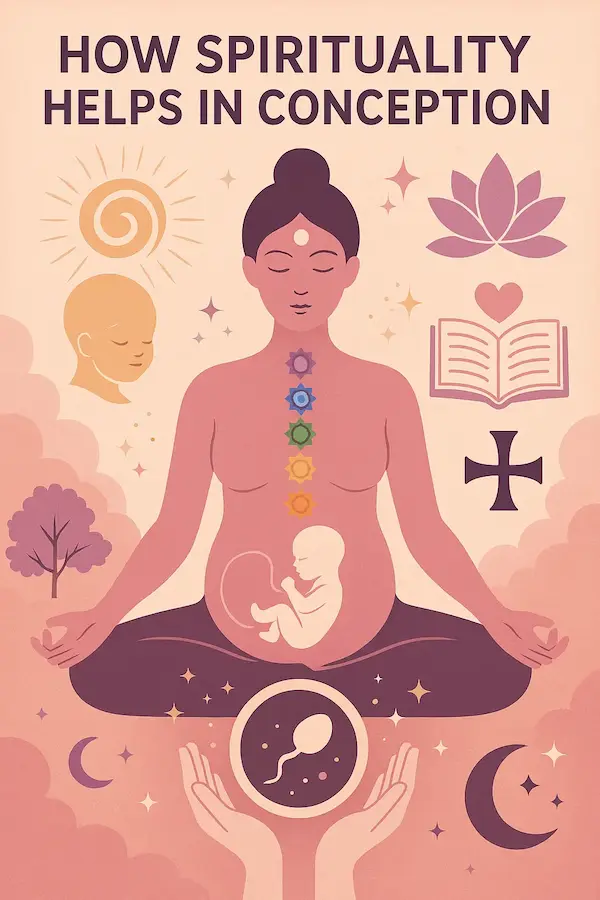
Spirtuality and Conception
The journey toward conception can be deeply emotional. For some individuals and couples, fertility concerns bring uncertainty, disappointment, hope, and many questions about the meaning of parenthood. Medical care focuses on the biological and reproductive aspects of conception, while spirituality may provide another framework through which people understand hope, faith, patience, and emotional wellbeing.
Spirituality can be deeply personal. For some people it is connected with prayer, faith in God, surrender, gratitude, or religious practice. For others, it may involve meditation, reflection, meaning, or a sense of connection with something greater than themselves.
This article explores the possible emotional and spiritual dimensions of the fertility journey. Spiritual practices may provide comfort, reflection, and emotional support, but they should not be presented as a guaranteed way to achieve conception or as a replacement for appropriate fertility assessment and treatment.
Understanding Conception and the Fertility Journey
Conception is a biological process involving reproductive health, ovulation, sperm, the reproductive organs, fertilisation, implantation, and many other biological factors. Fertility can be influenced by factors affecting either partner, and difficulties conceiving can have many different causes.
Because fertility is complex, experiencing difficulty conceiving does not mean that a person has failed spiritually, emotionally, or personally. Fertility difficulties can be challenging, but they should not automatically be interpreted as evidence of an emotional or spiritual blockage.
What Does Spirituality Mean in the Fertility Journey?
Spirituality can influence the way people understand difficult life experiences. During a fertility journey, faith and spiritual beliefs may provide a sense of hope, patience, meaning, or connection.
For a person whose spirituality is centred on God, prayer may become a way of expressing hopes and fears, asking for guidance, practising gratitude, and surrendering outcomes that cannot be controlled.
These experiences can be meaningful even when they do not change the biological factors involved in conception.
Spirituality, Stress and Emotional Wellbeing
Fertility treatment and prolonged uncertainty can be emotionally demanding. People may experience sadness, frustration, anxiety, disappointment, hope, or fear about the future.
Practices such as prayer, meditation, mindful breathing, journaling, and quiet reflection may provide a structured opportunity to slow down and process difficult emotions.
However, emotional distress should not be interpreted as proof that a person has caused their own fertility difficulties. Stress and emotional wellbeing are only part of a much larger picture, and fertility problems can occur for many biological and medical reasons.
Prayer, Faith and Surrender
For many people, prayer becomes especially meaningful during periods of uncertainty. A person may pray for conception, strength, guidance, healing, or emotional peace.
Prayer can also create a space for surrender. Surrender does not necessarily mean giving up. It can mean recognising the difference between what can be influenced through practical action and what ultimately remains outside personal control.
Someone may therefore continue medical treatment, make healthy choices, communicate openly with their partner, and seek professional support while also placing their hopes and fears in God's hands.
You can explore the broader psychological and spiritual dimensions of prayer in The Art of Prayer.
Mindfulness and Meditation During Fertility Treatment
Meditation and mindfulness can be used as practices for attention, relaxation, emotional awareness, and coping with stressful experiences.
During a fertility journey, a person may use meditation to create a few quiet moments away from constant thoughts about appointments, tests, treatment cycles, or possible outcomes.
- Slow breathing and gentle attention to the present moment.
- Short periods of quiet reflection.
- Gratitude practices that focus on meaningful aspects of life.
- Compassionate self-talk during difficult periods.
- Prayer or spiritual reflection according to personal beliefs.
These practices may support emotional wellbeing, but they should not be described as methods that directly guarantee fertilisation, implantation, or pregnancy.
Emotional Healing and Self-Awareness
A fertility journey can bring older emotions to the surface. Previous pregnancy loss, difficult relationships, grief, anxiety, or painful experiences may become more noticeable during periods of uncertainty.
Exploring these experiences can be valuable for emotional wellbeing. Therapy, counselling, journaling, supportive relationships, and reflective practices may help a person understand and process difficult emotions.
This process should not be confused with the idea that unresolved emotions necessarily cause infertility. Emotional healing can support wellbeing without being presented as a biological fertility treatment.
You can explore related psychological approaches through our Counselling and Therapeutic Intervention sections.
Spiritual Beliefs About the Soul and Conception
Some spiritual and religious traditions hold beliefs about the soul, destiny, conception, and the circumstances into which a child is born. These beliefs can give profound personal meaning to the experience of parenthood.
Some traditions, for example, describe a spiritual connection between parents and a child's soul before birth. Such ideas belong to particular spiritual or religious worldviews and should be understood as matters of belief rather than established scientific explanations of conception.
Keeping this distinction clear allows a person to explore spirituality without confusing spiritual interpretation with medical evidence.
The Role of the Partner
Conception is a shared journey, and the emotional wellbeing of both partners can matter greatly during fertility difficulties and treatment.
Partners can support one another by creating an environment of communication, respect, compassion, and emotional safety.
- Talking openly about fears and expectations.
- Supporting one another during medical appointments and treatment.
- Making space for prayer or spiritual reflection if meaningful to both partners.
- Sharing responsibilities rather than placing the emotional burden on one person.
- Seeking counselling or professional support when communication becomes difficult.
Emotional closeness cannot guarantee conception, but a supportive relationship can make a difficult fertility journey more manageable.
When Fertility Treatment Feels Overwhelming
Fertility investigations and treatment can involve repeated appointments, tests, procedures, financial pressure, uncertainty, and emotionally difficult outcomes. It is understandable for people to experience periods of exhaustion or distress.
Spiritual practices may provide a private space for reflection during this process. At the same time, medical questions should be discussed with qualified fertility professionals who can assess the individual's circumstances.
If fertility treatment is affecting mood, relationships, sleep, or everyday functioning, psychological counselling can also provide additional support.
Spirituality and Medical Fertility Care
Spirituality and medical treatment do not have to be viewed as competing approaches. A person can receive appropriate fertility care while also practising prayer, meditation, reflection, or other spiritual practices that are meaningful to them.
The important distinction is that spiritual practices should complement medical care rather than replace it. A meditation practice may support emotional wellbeing, for example, but it should not be presented as a substitute for fertility assessment or treatment.
Similarly, spiritual faith can provide hope and meaning without promising that a particular outcome will occur.
What About Energy Healing and Chakra Practices?
Chakra healing, Reiki, energy work, visualisation, and similar practices are used within various spiritual and complementary traditions. People may find such practices personally meaningful or relaxing.
However, claims that a blocked chakra or disrupted energy field directly causes infertility or that energy healing can restore biological fertility should not be presented as established medical facts.
If someone chooses to practise these approaches, they should be considered complementary practices rather than replacements for evidence-based fertility care.
Affirmations, Visualisation and Fertility
Affirmations and visualisation are sometimes used during fertility journeys to encourage hope, calm, or a more compassionate relationship with oneself.
For example, a person may use an affirmation such as:
"I can move through this journey with patience, hope, and self-compassion."
Another person may prefer a faith-based affirmation:
"I will take the steps I can, pray for guidance, and leave the outcome to Allah."
These statements can be used as reflective practices. They should not be understood as guarantees that thoughts or visualisation will produce pregnancy.
When to Seek Professional Support
Anyone experiencing difficulty conceiving should consider discussing their situation with an appropriately qualified healthcare professional. Fertility concerns can involve factors affecting either partner, and professional assessment can help identify appropriate next steps.
Psychological support may also be valuable when the fertility journey becomes emotionally overwhelming. Therapy or counselling can provide a confidential space to process grief, anxiety, relationship strain, disappointment, or uncertainty.
Spiritual support can exist alongside this care when it is meaningful to the individual.
A Holistic Perspective on the Fertility Journey
A holistic approach does not mean replacing medical science with spirituality. Rather, it can mean recognising that a person experiencing fertility difficulties has biological, emotional, relational, psychological, and spiritual dimensions.
Medical professionals can address reproductive health. Psychological support can help with emotional wellbeing and coping. Relationships can provide connection and practical support. Spirituality can provide meaning, hope, prayer, and a framework for surrender.
Each of these dimensions can be meaningful without claiming that one dimension alone determines whether conception will occur.
Key Takeaways
- Spirituality can provide hope, meaning, reflection, and emotional support during a fertility journey.
- Conception is a complex biological process and should not be reduced to emotional or spiritual factors.
- Prayer, mindfulness, meditation, and reflection may support emotional wellbeing when they are meaningful to the individual.
- Spiritual beliefs about the soul and conception can be personally meaningful but should be distinguished from established scientific explanations.
- Emotional difficulties during fertility treatment do not mean that a person has caused their fertility problems.
- Spiritual practices should complement, not replace, appropriate medical care.
- Psychological counselling can provide additional support when fertility difficulties affect emotional wellbeing or relationships.
Conclusion
The journey toward conception can involve much more than medical appointments and biological questions. It can also bring questions about hope, faith, relationships, meaning, patience, and emotional wellbeing.
Spirituality may provide a meaningful source of comfort for people who pray, reflect, meditate, or place their fertility journey within a broader spiritual framework. At the same time, spiritual beliefs should remain distinct from medical claims about fertility.
A balanced approach allows both realities to coexist: seek appropriate medical care, protect your emotional wellbeing, nurture supportive relationships, and practise spirituality in whatever way genuinely aligns with your beliefs.