
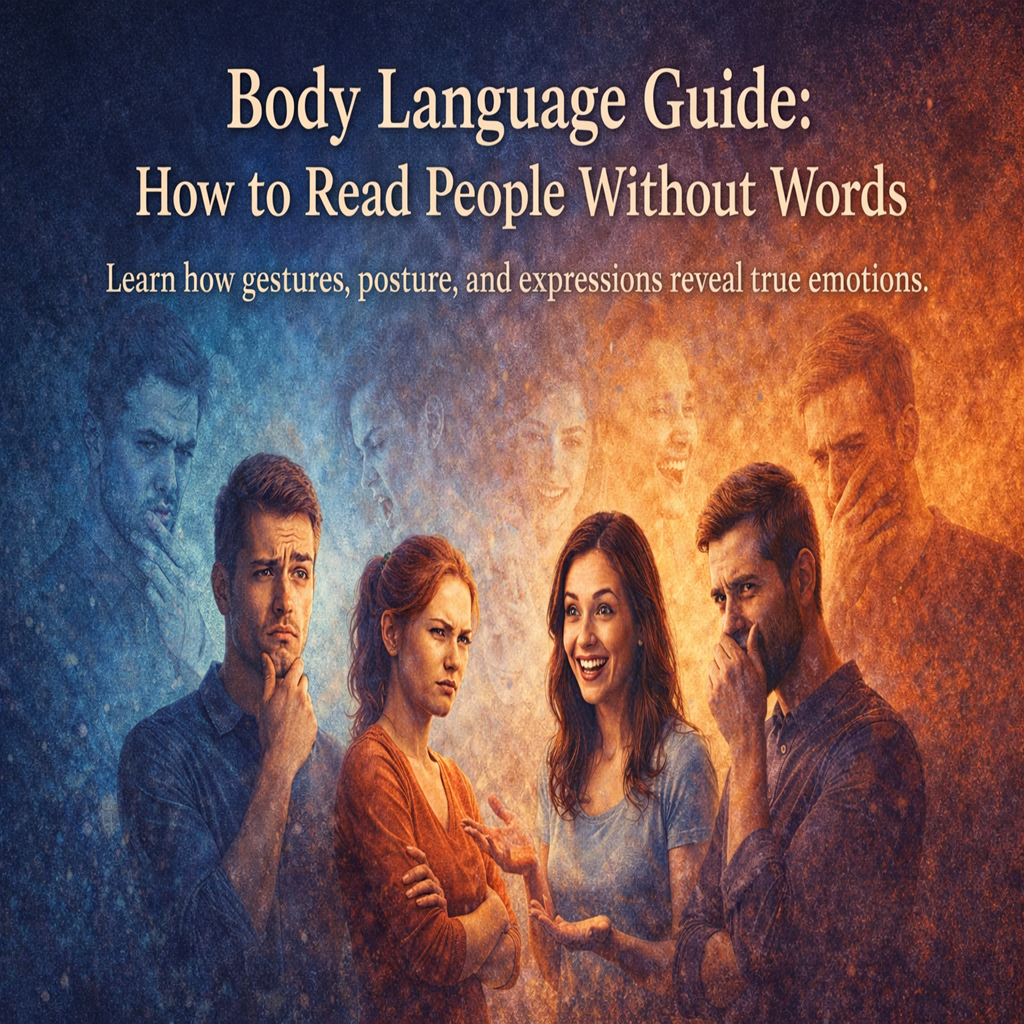
Body Language Guide || How to Read People Without Words?
Have you ever been in a conversation where the words spoken felt dissonant with the gestures made? Perhaps you noticed a friend saying they were happy while their posture suggested otherwise. This phenomenon illustrates a crucial truth about human interaction: communication extends far beyond the spoken word. From the earliest days of human existence, gestures, facial expressions, and body positions have conveyed meanings that words sometimes cannot express. This silent yet powerful form of communication, known as body language, is an intricate part of our social interactions. In this guide, we will explore the elements of body language, helping you enhance your observational skills and gain insight into the emotions of those around you.
Understanding Body Language
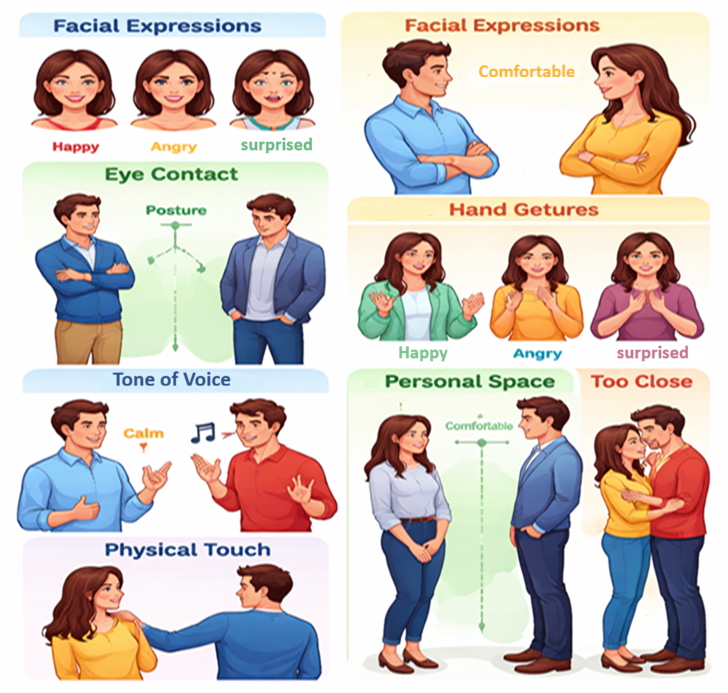
Body language encompasses a wide array of nonverbal signals that reveal a person’s emotions and intentions. It includes:
- Facial Expressions
- Eye Contact
- Posture
- Hand Gestures
- Tone of Voice
- Personal Space
- Physical Touch
While spoken language serves to convey information, body language often provides essential context that shapes how we interpret those words. For instance, when someone says, "I’m fine," the slouch in their shoulders or the hesitance in their voice might tell a different story. In such cases, the body can reveal the hidden truth behind the spoken facade, allowing us to understand the deeper emotions at play.
The Importance of Body Language:
Understanding body language is vital for several reasons, each of which enriches our interpersonal relationships and communication proficiency:
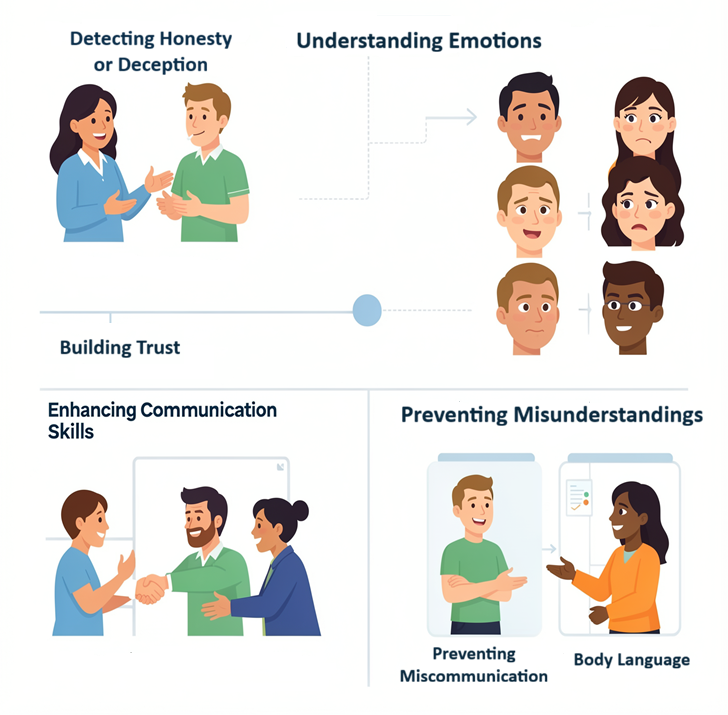
- Detecting Honesty or Deception
- Understanding Emotions
- Building Trust
- Enhancing Communication Skills
- Preventing Misunderstandings
Body language acts as a powerful tool for unveiling honesty or deception. People often struggle to maintain consistent nonverbal cues when they are not telling the truth. For example, if someone is telling a lie, they might avoid eye contact, fidget, or display other signs of discomfort. By observing these nonverbal signals alongside their spoken words, you can get a more rounded view of their sincerity.
Our emotions do not always find expression through words alone. Body language allows us to comprehend feelings such as joy, sadness, anger, or anxiety. Recognizing these emotions through cues such as facial expressions or posture can enhance empathy and strengthen your connections with others.
Positive body language fosters connection and trust in relationships. For instance, maintaining eye contact, using open gestures, and smiling can create an atmosphere of safety and openness, encouraging others to express themselves freely.
Proficiency in body language not only helps you interpret others' feelings but also improves your own communication skills. When you're aware of how your body language affects the message you send, you can adjust it to match your intentions more closely.
By reading body language, you can identify miscommunications before they escalate. A well-timed smile or reassuring gesture can diffuse tension and clarify intentions, reducing the likelihood of misunderstandings.
The Science of Nonverbal Communication
The ability to interpret body language is rooted in human biology and psychology. The brain, particularly the limbic system, governs emotional responses and deeply influences our nonverbal behaviors. Understanding these biological underpinnings can improve your skill in reading body language.
For example, the body's response to stress involves physiological changes such as increased heart rate and heightened muscle tension. When someone feels threatened, they might instinctively distance themselves or exhibit defensive postures. Similarly, attraction or interest can manifest as leaning closer, making eye contact, or mirroring someone's movements.
The Automatic Nature of Body Language
One of the most fascinating aspects of body language is its automatic nature. Many of our nonverbal responses are subconscious, meaning we might produce them without conscious thought. This automaticity makes body language a reliable indicator of true feelings, as people often find it challenging to control these instinctive physical reactions.
Facial Expressions: The Universal Language
Facial expressions are perhaps the richest form of body language because they can convey complex emotions clearly and quickly. Even small changes in facial features can communicate a wide range of feelings.
Psychologists have identified several basic emotions that are universally recognized through facial expressions:
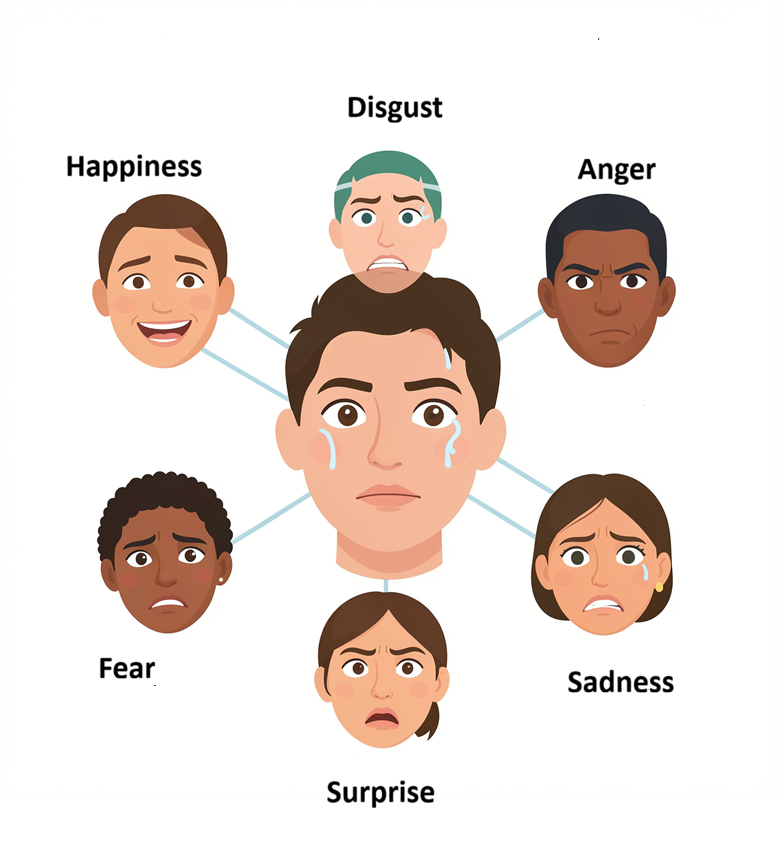
- Happiness
- Sadness
- Anger
- Fear
- Surprise
- Disgust
Characterized by upward movement of the lips and crinkles at the corners of the eyes.
Associated with downturned lips and drooping eyelids.
Involves furrowed brows, tight lips, and flaring nostrils.
Marked by wide-open eyes, raised eyebrows, and an open mouth.
Features raised eyebrows and a mouth that is often open.
Typically shown through wrinkled noses and raised upper lips.
These expressions transcend cultural boundaries, indicating that our ability to read these cues is an inherent aspect of being human.
Key Facial Cues to Observe
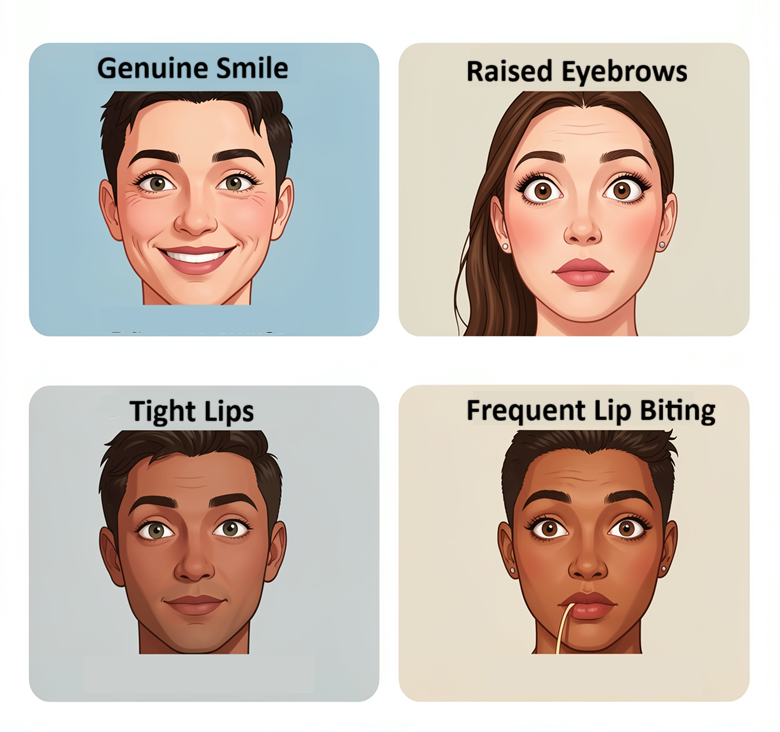
- Genuine Smiles
- Raised Eyebrows
- Tight Lips
- Frequent Lip Biting
A real smile engages not only the mouth but also the eyes, creating a warm and approachable look. A genuine smile is often referred to as a "Duchenne smile" since it involves the zygomatic major muscle (which raises the corners of the mouth) and the orbicularis oculi muscle (which crinkles the eyes).
Often indicate surprise or curiosity, prompting further engagement in the conversation.
May signify frustration, anger, or a struggle to control emotions. A person with tight lips might be holding back their true feelings.
Can suggest anxiety or nervousness, especially in high-pressure situations.
Understanding these facial cues helps you interpret what others may be feeling on a deeper level, beyond their spoken words.
Eye Contact: The Windows to Emotion
The eyes are often referred to as the "windows to the soul." Eye contact carries immense weight in communication; it can either build rapport or create distance, depending on how it’s employed.
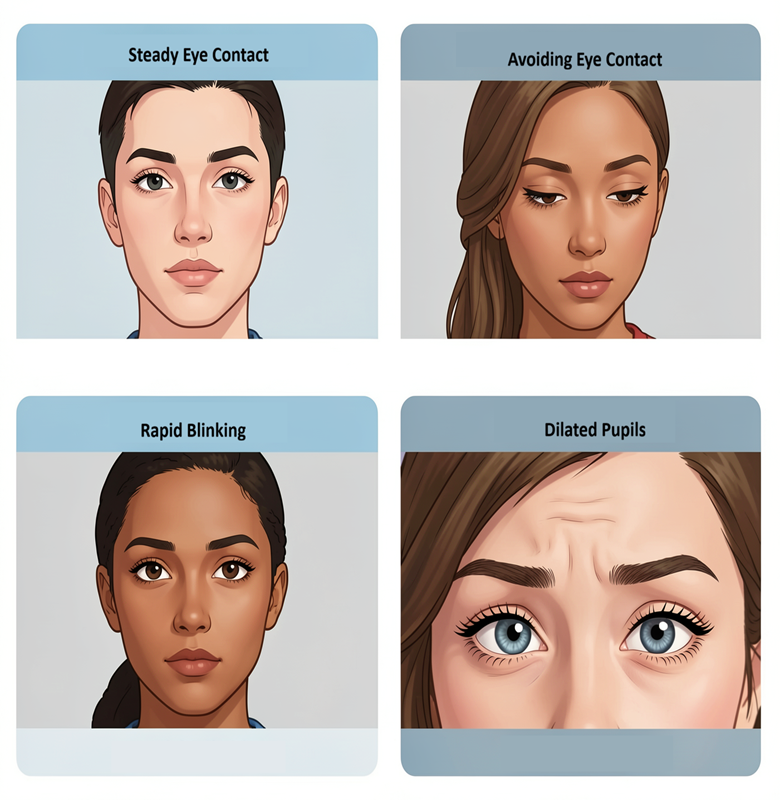
What Different Eye Behaviors May Mean
- Steady Eye Contact
- Avoiding Eye Contact
- Rapid Blinking
- Dilated Pupils
Generally indicates confidence and engagement. When two people maintain eye contact, it often signals interest and attentiveness.
Can suggest feelings of discomfort, anxiety, or guilt. A lack of eye contact might also indicate a lack of confidence or shyness.
Often associated with nervousness or stress. This can be a subconscious reaction to anxiety or discomfort in a given situation.
Can indicate attraction or excitement. When someone is genuinely interested or emotionally stimulated, their pupils may widen, providing a fascinating insight into their feelings.
Cultural contexts significantly influence eye contact norms. In certain cultures, direct eye contact is seen as respectful and assertive, while in others, it may be considered confrontational or rude. Being aware of these cultural differences is crucial for accurate interpretation.
Posture: The Body’s Silent Message
Posture is a fundamental component of body language that reflects a person's emotional state and level of confidence. Your physical stance can say a lot about how you feel in a given moment.
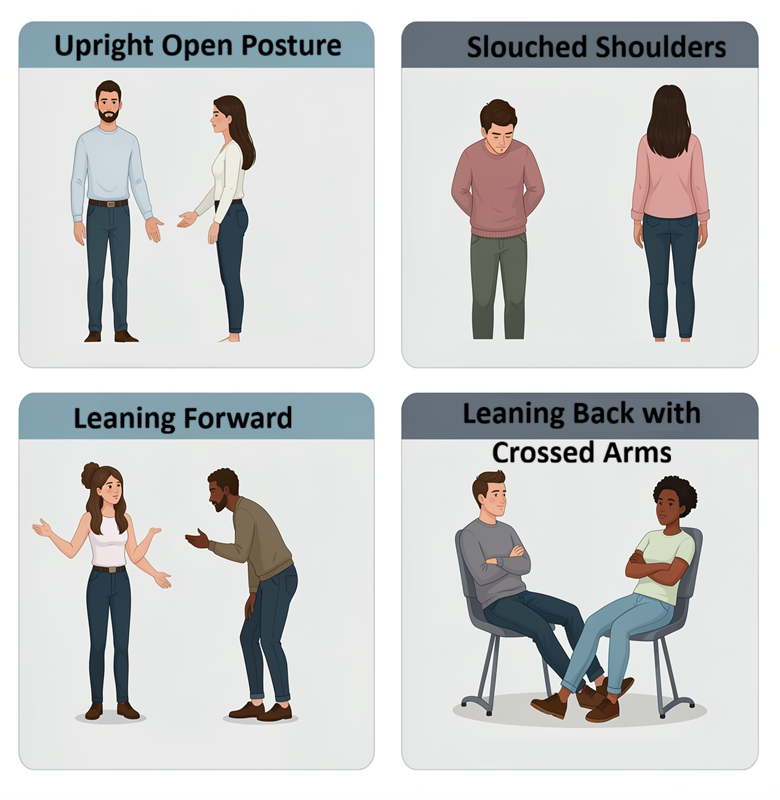
Common Posture Signals
- Upright and Open Posture
- Slouched Shoulders
- Leaning Forward
- Leaning Back with Crossed Arms
Indicates confidence and approachability. An upright posture, with shoulders back and head held high, typically conveys self-assurance.
Often signify sadness, fatigue, or low self-esteem. A person who slouches may be feeling defeated or disheartened.
Suggests interest and engagement. This signifies that a person is listening attentively and wants to connect with the speaker.
May signal defensiveness, boredom, or resistance. When someone crosses their arms while leaning away, they might be signaling discomfort with the conversation or a desire to disengage.
Posture often operates subconsciously. Someone feeling secure and confident occupies more space, often fidgeting less, while those feeling threatened or insecure may try to make themselves smaller or withdraw.
Hand Gestures: The Art of Nonverbal Communication
Hands are incredibly expressive and are often used to amplify what we are saying verbally. The manner in which we move our hands while speaking can enhance communication but can also betray our true feelings.
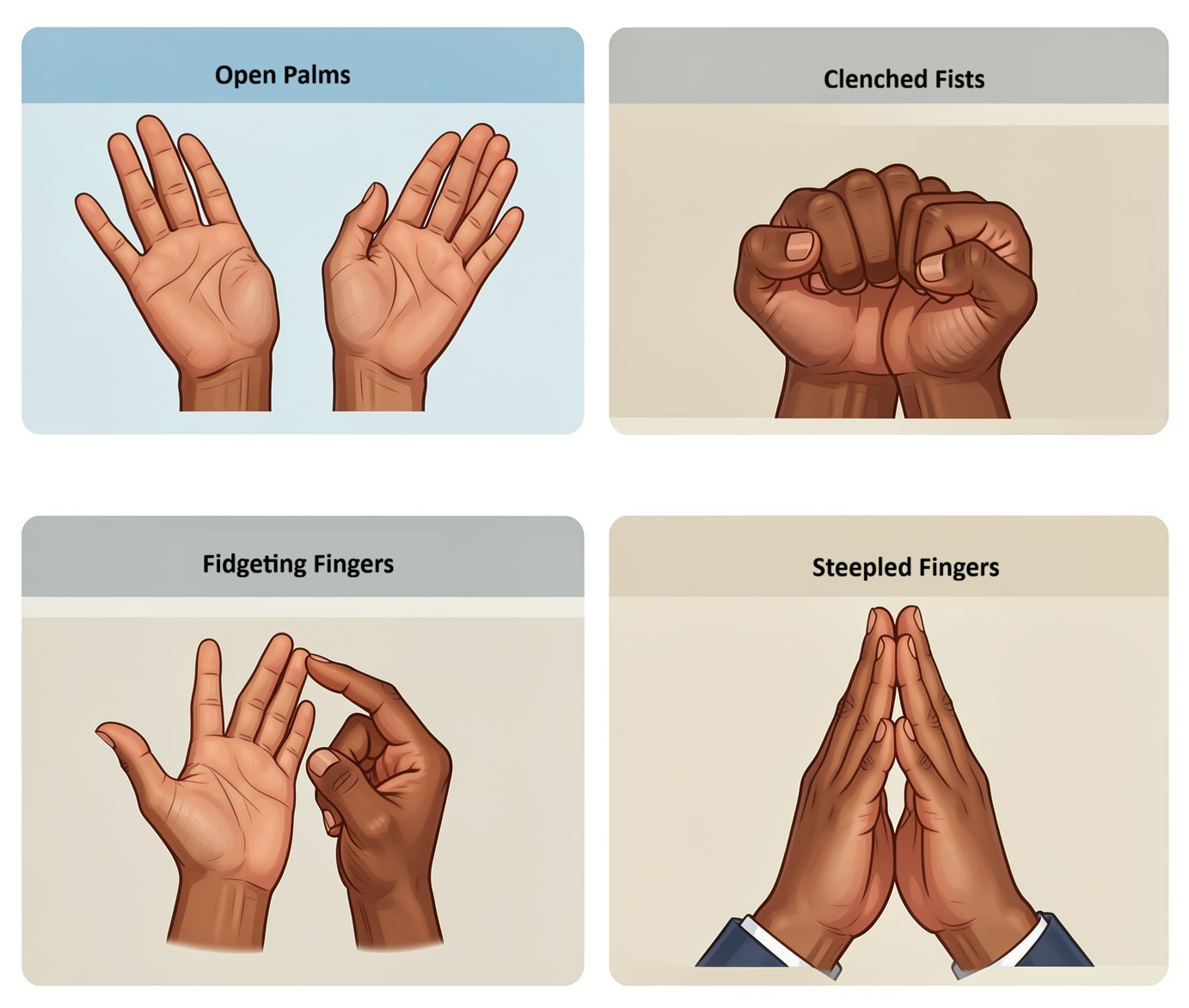
Common Hand Signals
- Open Palms
- Clenched Fists
- Fidgeting Fingers
- Steepled Fingers
Often associated with honesty and openness. Showing your palms can create a sense of trust and transparency during a conversation.
Indicate anger, frustration, or tension. A tightly clenched fist can convey a sense of being on guard or ready to fight back.
May suggest anxiety, nervousness, or impatience. Constantly tapping or moving your fingers can indicate restlessness or discomfort.
Often seen in confident or authoritative individuals, this gesture conveys thoughtfulness and control.
Just like other aspects of body language, hand gestures can vary widely across different cultures. For example, some gestures that are considered positive in one culture may be seen as offensive in another. Always interpret hand signals within context while considering the cultural background of the individuals involved.
Personal Space: Understanding Comfort Zones
The physical distance maintained between individuals conveys significant information about their comfort levels, relationships, and social norms.
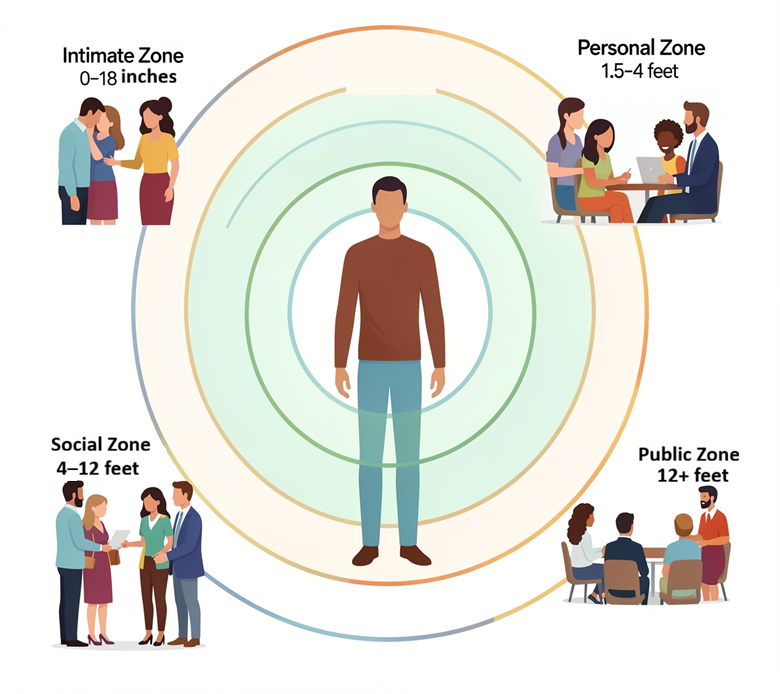
Zones of Personal Space
- Intimate Zone:(0–18 inches)
- Personal Zone: (1.5–4 feet)
- Social Zone: (4–12 feet)
- Public Zone: (12+ feet)
This space is reserved for close relationships, such as partners or family members. It is a zone of comfort and trust.
Typically reserved for friends and acquaintances. This distance allows for comfortable interaction without feeling intrusive.
Commonly seen in professional interactions, this distance promotes a sense of professionalism while allowing for conversation.
Used during public speaking or interactions with strangers, this space signifies a more formal engagement.
When someone moves into your personal space without invitation, it may signal attraction or a desire for dominance. Conversely, stepping back can indicate discomfort or a need for greater distance.
Mirroring: The Unconscious Connection
Mirroring occurs when two individuals subconsciously mimic each other’s gestures, postures, or tone of voice. This often happens when people feel comfortable and connected with one another. Mirroring creates a sense of rapport and belonging.
For example, if one person leans forward in conversation, their partner might instinctively do the same, demonstrating mutual interest. If both individuals smile at the same time, it can be a powerful signal of emotional alignment. Mirroring indicates that a bond exists between the two people, fostering trust and cooperation.
Signs of Nervousness or Discomfort
Human bodies display unmistakable signals when someone feels anxious or uncomfortable. Recognizing these cues can help you provide support or adjust your approach, creating a more comfortable atmosphere.
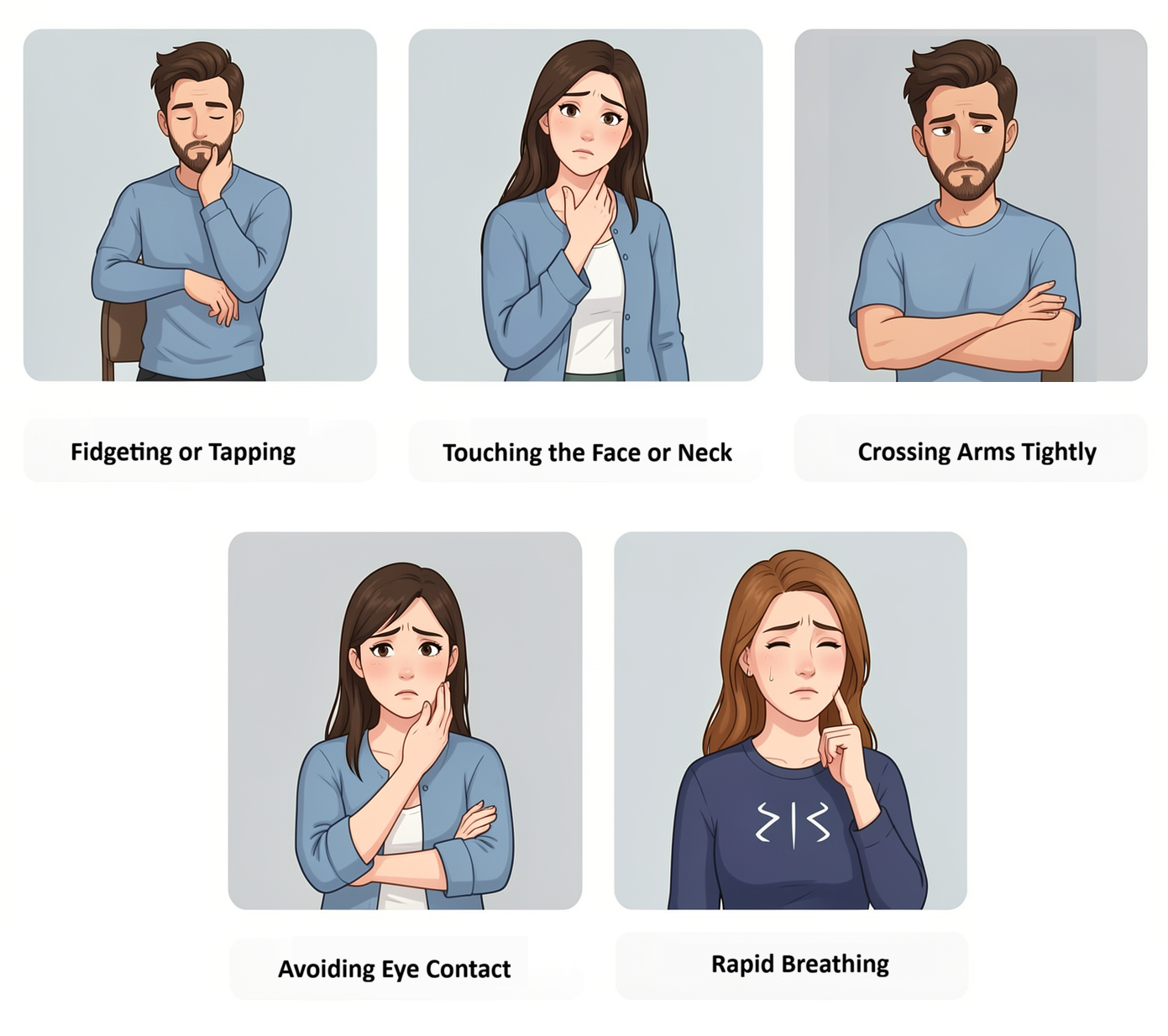
Common Signs of Anxiety
- Fidgeting or Tapping
- Touching the Face or Neck
- Crossing Arms Tightly
- Avoiding Eye Contact
- Rapid Breathing
Restlessness often manifests through tapping fingers or feet, which can suggest impatience or nervousness.
This behavior can signal anxiety or a desire for comfort, as people often touch their face or neck when they feel uncertain.
This posture may suggest defensiveness, vulnerability, or a desire to shield oneself from perceived threats.
Shying away from eye contact can indicate discomfort, guilt, or a reluctance to engage.
Fast or shallow breathing might be a physical manifestation of stress or anxiety.
These behaviors are linked to the body’s fight-or-flight response, which activates during stress. Recognizing these signals allows you to respond appropriately to those who may need reassurance or support.
Signs of Confidence
In contrast to anxiety, confident individuals display open and relaxed body language. Their demeanor conveys assurance and ease, making them more approachable.
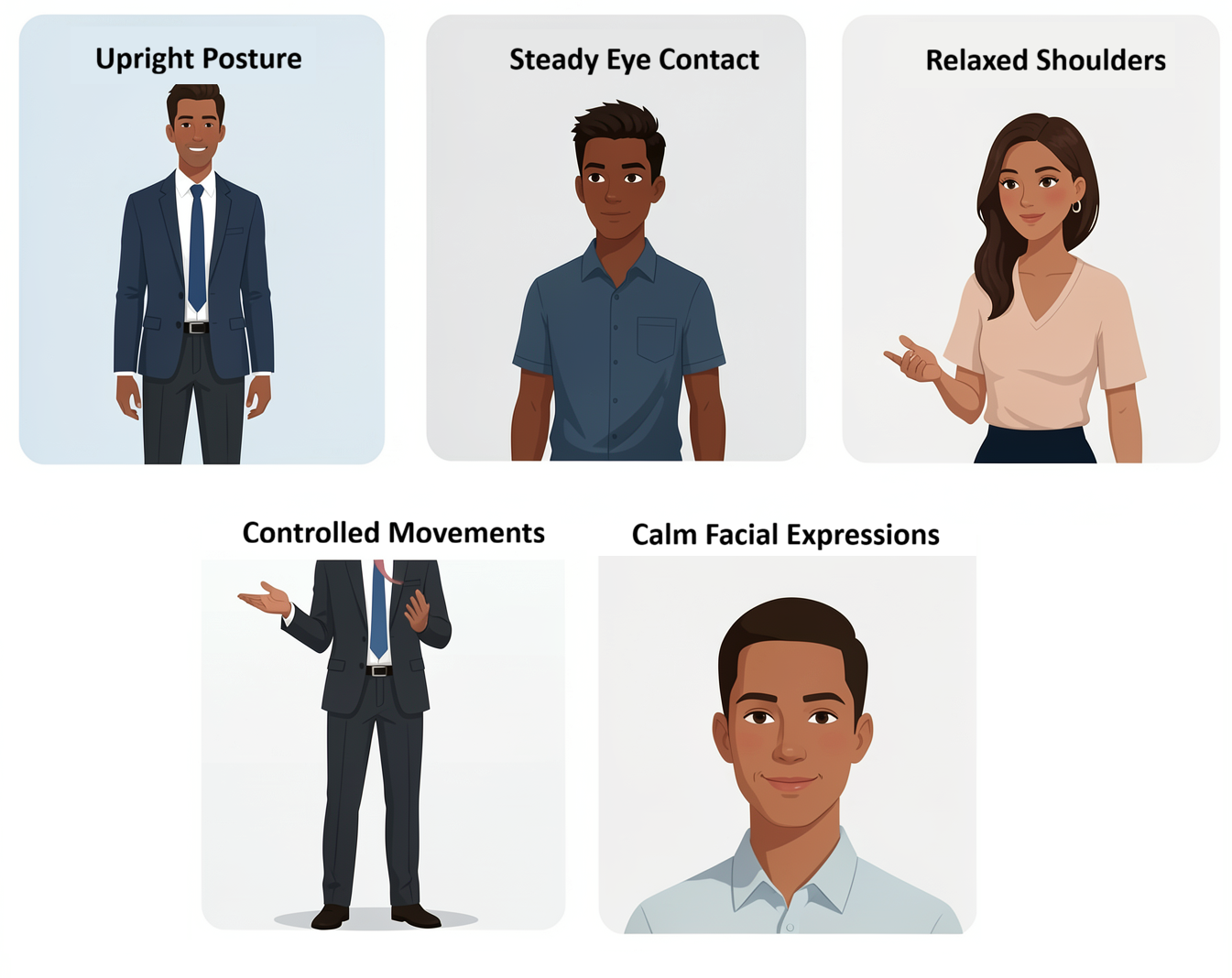
Typical Signs of Confidence
- Upright Posture
- Steady Eye Contact
- Relaxed Shoulders
- Controlled Movements
- Calm Facial Expressions
A straight back and relaxed shoulders send a clear message of self-assuredness.
Maintaining eye contact with others demonstrates engagement and confidence.
A relaxed body posture communicates ease and comfort in oneself and in the environment.
Confident individuals move with purpose and intention, their movements being deliberate rather than erratic.
A calm demeanor often provides reassurance to others and creates a positive atmosphere during interactions.
Confidence is not solely about verbal communication; it manifests in the entirety of a person's presence, impacting how others perceive and respond to them.
Can Body Language Reveal Lies?
Although body language can provide clues to dishonest behavior, it is not an absolute lie detector. Relying on one specific gesture could lead to incorrect conclusions. Instead, it is essential to observe clusters of behaviors.
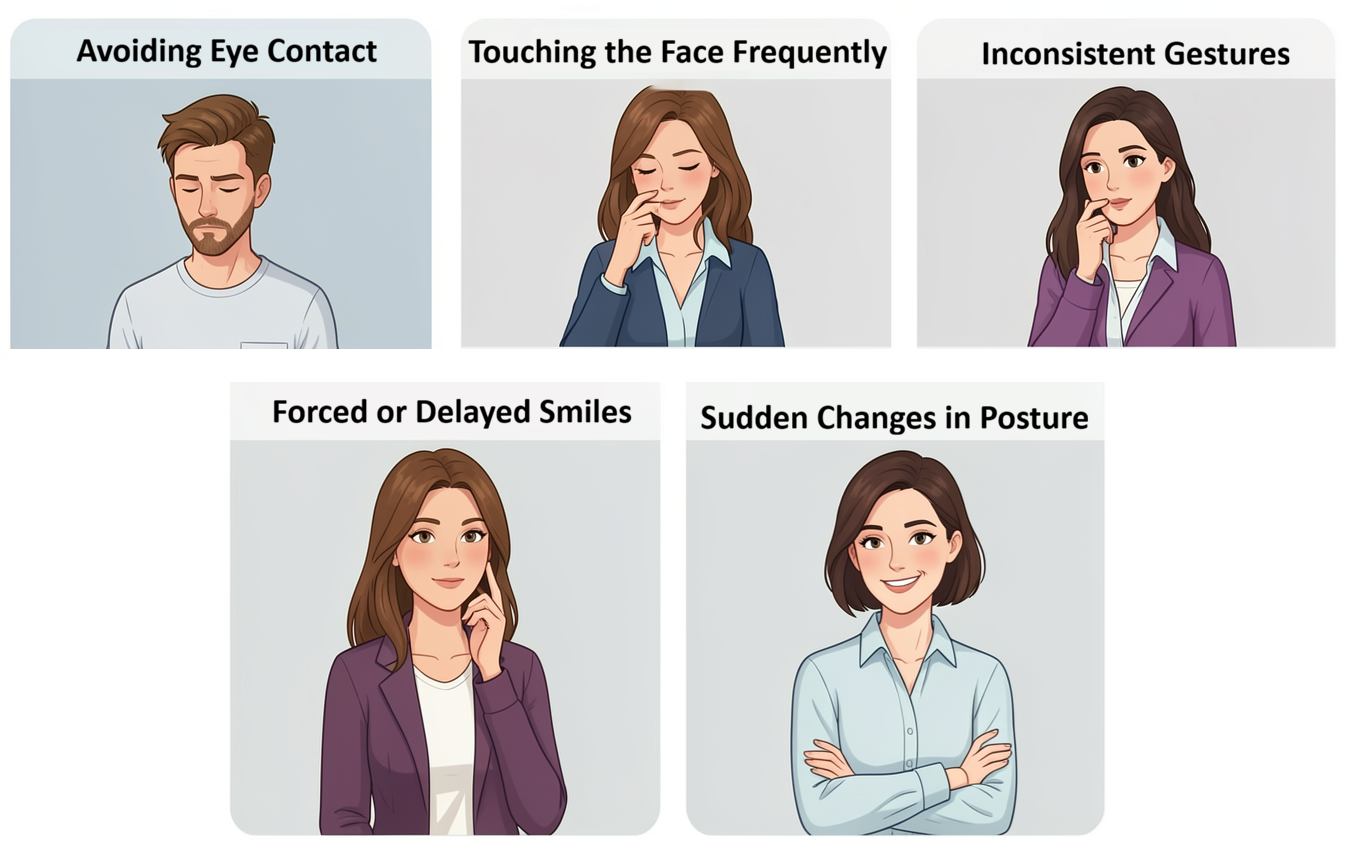
Potential Signs of Dishonesty
- Avoiding Eye Contact
- Touching the Face Frequently
- Inconsistent Gestures
- Forced or Delayed Smiles
- Sudden Changes in Posture
A common indication that someone is not being completely truthful, as they may feel uncomfortable with their deception.
This action can signify discomfort or a subconscious attempt to conceal guilt.
Dishonest individuals may exhibit a mismatch between their words and body language, such as nodding while denying something.
If someone’s smile seems stiff or delayed, it may indicate a lack of genuine happiness or sincerity.
If someone shifts from open to closed body language, it could indicate a change in comfort level, possibly due to dishonesty.
Although these signals can provide insight, it's crucial to consider the context and baseline behavior of the individual. A person may exhibit these behaviors due to anxiety rather than deceit.
Improving Your Ability to Read Body Language
Like any skill, reading body language can be polished with awareness and practice. Here are some practical tips to help sharpen your observational skills:
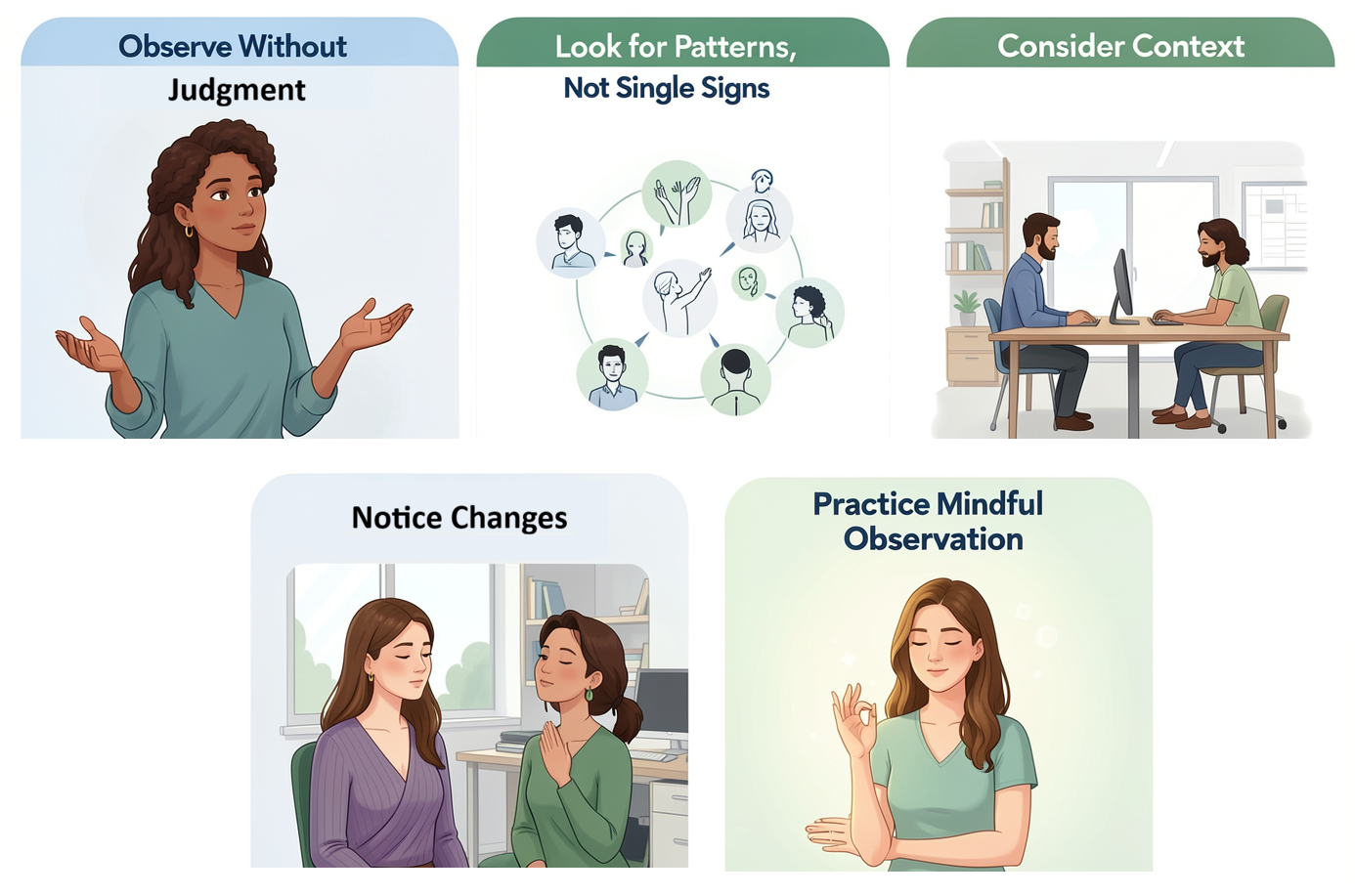
Practical Tips for Reading Body Language
- Observe Without Judgment
- Look for Patterns, Not Single Signs
- Consider Context
- Notice Changes
- Practice Mindful Observation
Pay attention to how individuals react in different situations without rushing to conclusions.
One isolated gesture may not convey much meaning, but by looking for patterns over time, you can reveal underlying emotions.
Be mindful of situational factors that may explain certain body language cues. A person crossing their arms might just be feeling cold, not necessarily defensive.
Sudden shifts in body language can signal emotional changes. Being attuned to these changes can provide insights into the conversation's dynamics.
Engage in mindful observation during conversations, public speeches, or social gatherings. The more you practice, the more intuitive your understanding of body language will become.
Using Your Own Body Language Effectively
An understanding of body language extends beyond observing others; it also involves being conscious of how your nonverbal communication signals impact those around you. Your body language can fundamentally alter how you are perceived.
Positive Body Language Habits to Cultivate
- Maintain Gentle Eye Contact
- Keep Your Posture Open and Relaxed
- Avoid Crossing Your Arms During Important Conversations
- Use Natural Hand Gestures While Speaking
- Smile When Appropriate
This shows interest and builds rapport without making others feel uncomfortable.
An open body posture conveys approachability and confidence.
This can come across as defensive or closed off.
This can enhance your verbal message and demonstrate engagement.
A warm smile can brighten your presence and create a welcoming atmosphere.
Making these small adjustments to your body language will render you more approachable and trustworthy, enhancing your communications across various contexts.
The Interplay of Body Language and Emotions
The connection between body language and emotions is a two-way street; emotions influence how we carry ourselves, while our physical presence can also affect our feelings. This interplay is crucial to understanding both ourselves and others.
For example, adopting an upright posture can elevate your mood and self-confidence, while smiling can stimulate positive emotions, even if you do not initially feel happy. Deep breathing can help calm the body during stressful moments, further illustrating the profound connection between our mind and body.
Cultural Differences in Body Language
While many elements of body language are universal, others can differ significantly across cultures. Being sensitive to these differences can prevent misunderstandings and help foster better communication.
- Direct Eye Contact
- Personal Space Preferences
- Gesture Interpretations
In some cultures, making direct eye contact signifies respect and attentiveness. In contrast, it's viewed as rude or confrontational in others.
Attitudes toward personal space can vary. In some cultures, close physical proximity is welcomed, while in others, it may be considered intrusive.
Certain hand gestures may convey different meanings depending on cultural context. For example, a thumbs-up might signal approval in some countries, while in others, it can be an insult.
Acquiring knowledge of cultural nuances in body language aids in navigating social situations more smoothly and can enhance your ability to connect with people from diverse backgrounds.
When Body Language and Words Don’t Align
Occasionally, you may encounter incongruence where a person's words and body language convey conflicting messages. This incongruence can often signal discomfort or dishonesty.
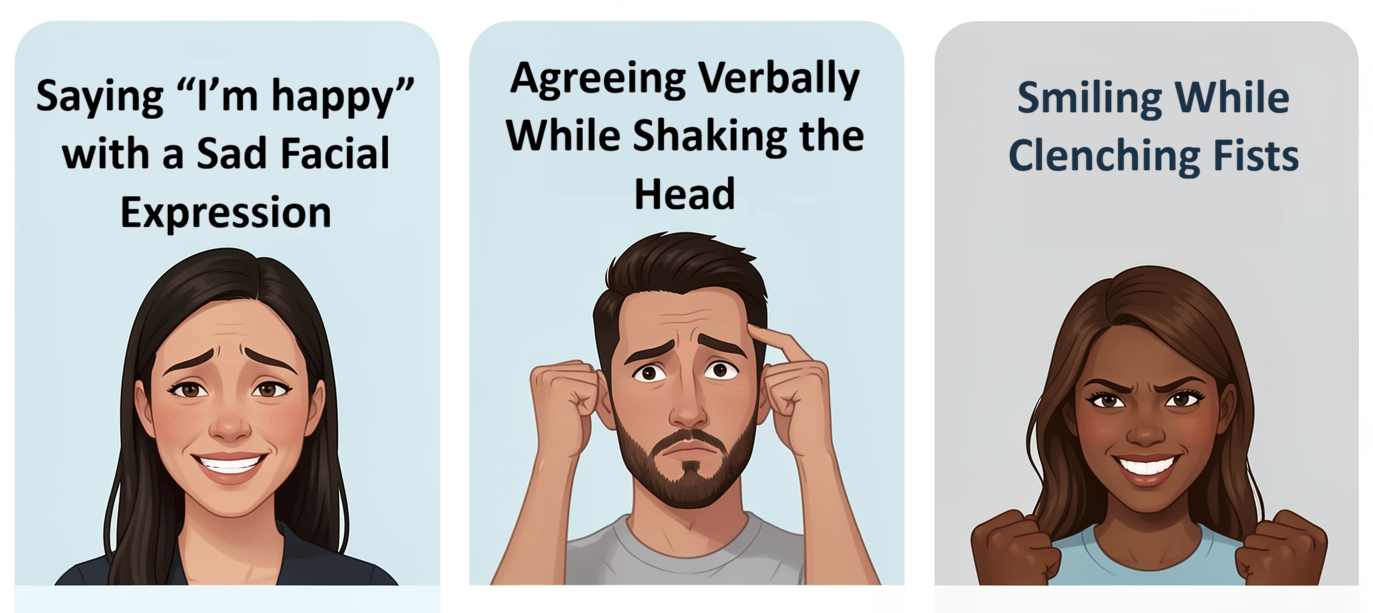
- Saying “I’m happy” with a Sad Facial Expression
- Agreeing Verbally While Shaking the Head
- Smiling While Clenching Fists
This discrepancy suggests that the individual may not be genuinely at ease despite their verbal assurance.
This conflicting gesture indicates reluctance to accept the agreeance or an unexpressed disagreement.
This creates an image of forced positivity, hinting at underlying tension or frustration.
When faced with mixed signals, people tend to trust body language more than spoken words. Learning to identify and interpret these inconsistencies is crucial for effective communication.
The Power of Silent Communication
In many cases, body language might carry more significance than verbal communication because it is:
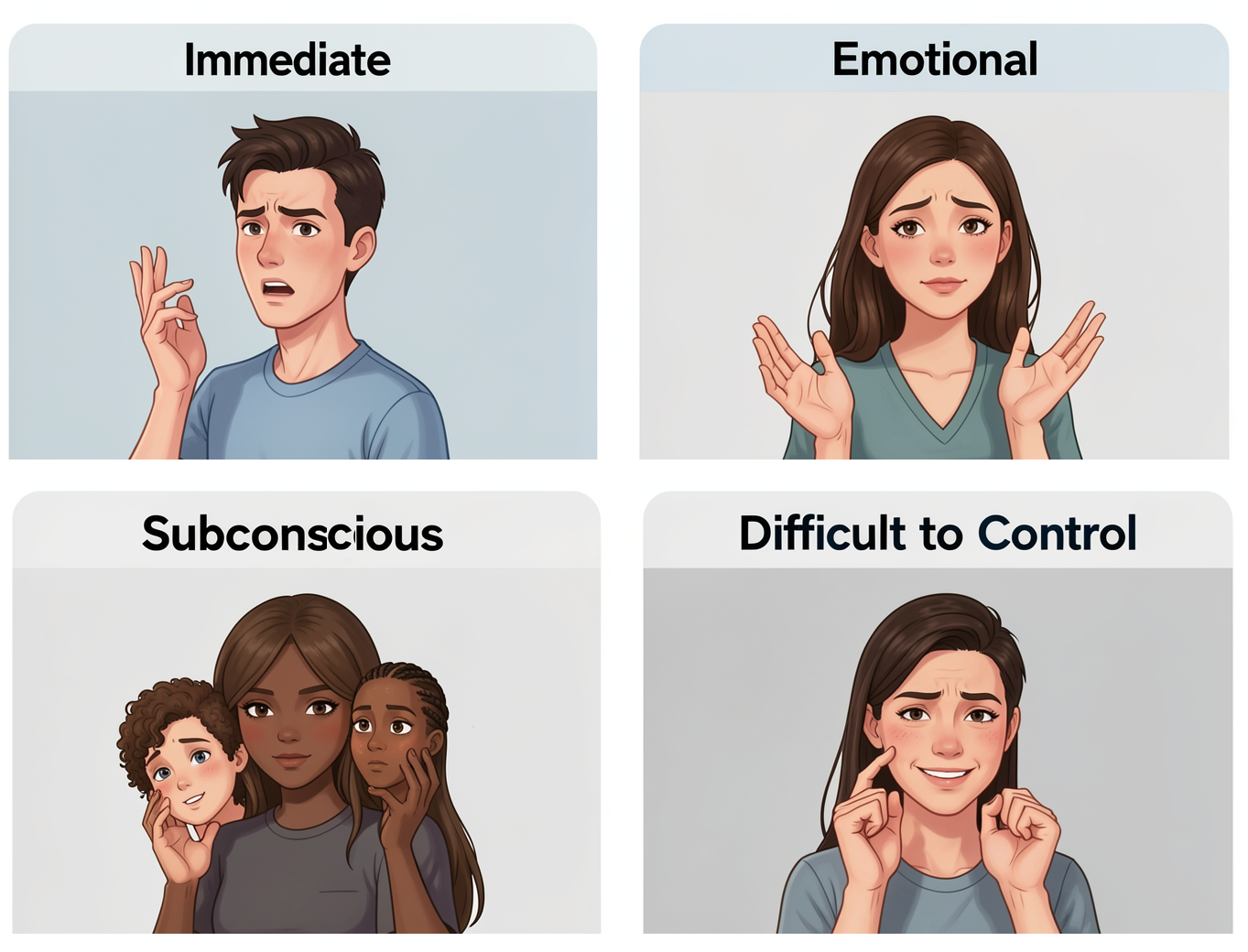
- Immediate
- Emotional
- Subconscious
- Difficult to Control
Responses occur in real time, often reflecting genuine emotions before people have time to process or articulate them.
Nonverbal cues provide rich emotional context, often deeper than what words can convey.
Much of our nonverbal communication happens without conscious intention, revealing our authentic feelings.
Authentic expressions and gestures are challenging to manipulate deliberately, which means they often tell the truth about how a person feels.
An isolated glance, gesture, or posture can communicate intricate emotions more effectively than an elaborate explanation. This silent form of communication shapes first impressions, relationships, and overall social interactions.
The Power of Silent Communication
In the realm of human interaction, body language serves as a potent and often underestimated form of communication. It reveals emotions, intentions, and attitudes that words frequently obscure. By honing your ability to observe gestures, posture, facial expressions, and eye contact, you will develop a deeper understanding of those around you.
At the same time, becoming aware of your own body language can enhance your self-confidence, improve your relationships, and refine your communication skills. As you practice observing nonverbal cues, interpreting them will become more intuitive.
In a world saturated with words, the body still speaks the loudest. Embracing this silent language empowers you to gain valuable insights into human behavior and emotions, enriching both your personal and professional relationships. This newfound awareness opens doors to deeper connections with others, allowing you to engage with the world in a more meaningful and impactful way.
Read Next