
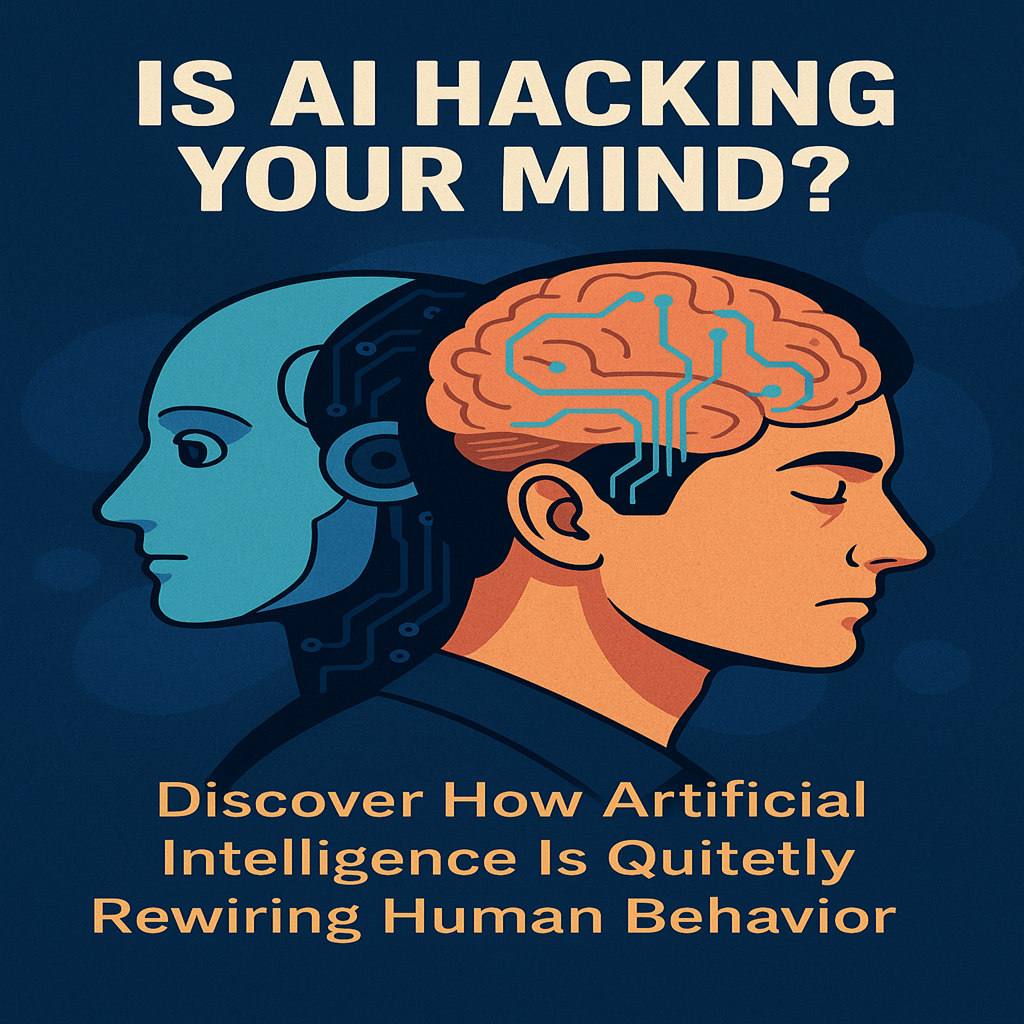
How AI Impacts Human Behavior Psychologically?: Is It Human-Friendly?
Artificial Intelligence (AI) is no longer a distant idea associated only with science fiction. It is part of everyday life, appearing in search engines, social media feeds, navigation apps, online shopping, educational tools, workplaces, and conversational assistants. These systems can save time, personalize information, and help people complete tasks. At the same time, their growing presence raises important questions about human attention, decision-making, emotional wellbeing, privacy, and independence.
AI does not influence people in only one direction. Its effects depend on how a tool is designed, how it is used, the information it provides, and the needs of the person interacting with it. A recommendation system may help someone discover useful information, for example, but repeated exposure to similar content may also narrow what they see.
This article explores how AI may shape human behavior psychologically, the benefits and risks of AI-assisted mental health support, and practical ways to use technology without losing human judgment or meaningful social connection.
What Is Artificial Intelligence?
Artificial Intelligence refers to computer systems designed to perform tasks that commonly involve abilities such as recognizing patterns, processing language, generating content, making predictions, or supporting decisions. Different AI systems perform different functions. A recommendation algorithm, a navigation tool, a conversational chatbot, and a medical decision-support system should not be treated as if they work in exactly the same way.
Many AI systems learn patterns from data or use rules and statistical models to produce outputs. Their responses can appear personal or intelligent, but this does not automatically mean that they understand situations as a human does or possess human emotions, intentions, or lived experience.
Understanding this distinction helps people evaluate AI realistically: it can be a useful tool, but its output still needs to be checked, particularly when the subject involves health, money, relationships, safety, or important life decisions.
How AI Influences Human Behavior
1. Attention, Habits, and Digital Overuse
Many digital platforms use algorithms to recommend content based on previous activity, viewing patterns, searches, or other signals. Personalization can make information easier to find, but it can also encourage people to remain on a platform longer than they originally intended.
When someone repeatedly checks notifications, watches recommended videos, or scrolls whenever they feel bored, the behavior can become habitual. Over time, frequent interruptions may make it harder to maintain attention on slower tasks, although the effects differ between people and depend on their broader habits and circumstances.
Warning signs of unhealthy use include repeatedly losing track of time, neglecting responsibilities, losing sleep, or feeling unable to stop despite wanting to. These signs are reasons to review a person's technology habits, not automatic proof of an addiction.
2. Emotional Wellbeing and Social Comparison
AI-supported platforms can influence what people see about appearance, success, lifestyle, relationships, and social status. If a feed repeatedly presents idealized images or emotionally intense content, a person may begin comparing everyday life with a highly selective picture of other people's experiences.
Such comparisons may contribute to dissatisfaction, fear of missing out (FOMO), or pressure to gain approval through likes and views. However, these effects are not inevitable. Online communities can also provide education, belonging, creativity, and support, particularly for people who struggle to find similar communities offline.
A useful strategy is to notice how certain content affects mood and self-esteem. Curating a feed, taking breaks, and making room for offline activities can help people use digital platforms more intentionally. Our article on self-talk and its psychological effects also explores how internal dialogue can influence the way people interpret experiences.
3. AI, Decision-Making, and Personal Autonomy
AI can influence decisions by ranking search results, recommending products, suggesting routes, filtering news, or predicting what a person might prefer. These features can reduce effort and help users manage complex information. However, recommendations are not neutral guarantees of what is best for an individual.
When people repeatedly accept suggestions without considering alternatives, they may become less active in evaluating their choices. A recommendation may reflect a platform's design goals, available data, commercial incentives, or limitations rather than the user's full interests.
This is one reason critical thinking remains important. Before accepting an AI-generated answer or recommendation, consider the evidence, ask what information might be missing, and compare important claims with trustworthy sources. For high-stakes decisions, use AI as an aid to understanding rather than as the final authority.
4. Confirmation Bias and Filter Bubbles
Confirmation bias is the tendency to favor information that supports existing beliefs while giving less attention to conflicting evidence. Personalized systems may sometimes reinforce this tendency when they repeatedly recommend material similar to what a person has already viewed or engaged with.
A person who sees only familiar opinions may begin to assume that their own perspective is more widely accepted than it actually is. This can make disagreement seem threatening and may reduce opportunities to understand people with different experiences.
To counter this pattern, deliberately consult reliable sources with different perspectives, check the original evidence behind a claim, and distinguish facts from commentary. Exposure to another viewpoint does not require agreeing with it; the goal is to make judgments based on a broader and more accurate understanding.
AI and Mental Health: Benefits and Limitations
AI-based tools are increasingly used for mental health information, mood tracking, guided exercises, and conversational support. Some tools may help people organize their thoughts, learn general coping strategies, or find information about available services. Their accessibility can be useful when a person feels uncomfortable raising a sensitive question or needs help locating resources.
However, AI-generated support is not equivalent to a professional therapeutic relationship. A chatbot may misunderstand context, overlook important warning signs, provide inaccurate information, or respond in a way that sounds confident despite uncertainty. It cannot independently guarantee the clinical judgment, confidentiality, or individualized care expected from a qualified professional.
Potential Benefits
- Accessibility: Digital tools may make general information and basic exercises easier to access.
- Reflection: Some users find it helpful to organize thoughts or record mood patterns.
- Learning: AI can explain psychological concepts and suggest questions to discuss with a professional.
- Convenience: Certain tools are available outside ordinary appointment hours, depending on the service.
Important Risks and Limitations
- Accuracy: AI can produce misleading, incomplete, or incorrect information.
- Limited understanding: A fluent response does not prove that the system understands a person's circumstances.
- Privacy: Sensitive information entered into a service may be processed or stored according to its policies.
- Overreliance: Some users may depend on a chatbot instead of seeking needed human support.
- Complex situations: Trauma, abuse, severe distress, and urgent mental health concerns may require qualified professional help.
AI can be used to prepare questions, learn basic terminology, or reflect on everyday concerns, but it should not be treated as a substitute for assessment or treatment. If emotional difficulties persist or interfere with daily functioning, consider speaking with an appropriately qualified mental health professional.
AI and Children's Psychological Development
Children and adolescents are growing up in environments where AI may be integrated into educational platforms, games, search tools, and conversational applications. Carefully chosen educational tools can help explain difficult subjects, provide practice, and adapt material to a learner's needs. Their value depends on age-appropriate design, the quality of information, and appropriate adult guidance.
Concerns arise when technology replaces rather than supports important developmental experiences. Children also learn through conversation, play, physical activity, creative exploration, disagreement, and direct relationships with other people. Excessive reliance on automated answers may reduce opportunities to practice independent problem-solving if children are not encouraged to think through questions themselves.
AI-generated material may also contain errors, bias, or content that is unsuitable for a particular age. Children may not always recognize when a system is inventing information or presenting a convincing answer without reliable evidence. Parents and educators can help by discussing how AI works, checking information together, protecting personal data, and encouraging children to explain their own reasoning.
The Illusion of Personal Understanding
Some AI systems use conversational language, personalization, and remembered preferences to make interactions feel natural. A system may respond in a supportive tone or refer to information a user previously shared. This can create a sense that the technology knows the person deeply.
A friendly response can feel reassuring, but it should not be confused with human empathy or a reciprocal relationship. AI can generate language that resembles understanding without having human life experiences or feelings. Users should also remember that personalization depends on the system's design and the information available to it.
It is sensible to avoid sharing unnecessary sensitive details, review privacy settings, and think carefully before allowing a digital tool to influence important personal decisions. Technology should support a person's agency, not quietly replace it.
AI in the Workplace: Productivity and Psychological Pressure
In the workplace, AI can assist with repetitive tasks, organize information, summarize documents, and support some forms of analysis. Used responsibly, these capabilities may free employees to focus on tasks that require creativity, judgment, communication, and human experience.
At the same time, rapid technological change can create uncertainty about job security, required skills, monitoring, and performance expectations. Employees may feel pressure to remain constantly available or to produce more work simply because automated tools make certain tasks faster. The effects depend on workplace policies, job design, training, and how the technology is introduced.
Organizations can reduce unnecessary stress by explaining how AI will be used, training employees, protecting personal data, and maintaining human oversight for consequential decisions. Workers can benefit from developing digital skills while also strengthening abilities that technology cannot reliably replace, such as ethical judgment, collaboration, and nuanced interpersonal communication.
Can AI Understand Human Emotions?
Some systems attempt to classify emotional signals using text, voice, facial images, or patterns of behavior. These systems can identify statistical patterns, but interpreting a person's inner emotional state is difficult. The same facial expression, words, or tone may mean different things depending on culture, context, disability, personality, and the situation.
Therefore, an automated emotional label should not be treated as definitive proof of what someone feels, intends, or believes. When emotional interpretation is used in areas such as recruitment, education, healthcare, or security, questions about accuracy, consent, bias, and privacy become especially important.
Human emotions are complex experiences. Technology may offer clues or support analysis, but respectful conversation and context remain essential when trying to understand another person.
Practical Ways to Use AI Without Losing Human Judgment
The goal does not have to be avoiding AI completely. Instead, people can build habits that preserve independent thinking and healthier relationships with technology:
- Check important claims: Verify health, financial, legal, and other consequential information with reliable sources or qualified professionals.
- Protect privacy: Avoid entering passwords, financial details, or unnecessary sensitive personal information into AI tools.
- Set clear limits: Use notifications, screen-time settings, and planned breaks when digital habits interfere with sleep or responsibilities.
- Think before accepting: Ask what evidence supports a recommendation and what alternatives might exist.
- Maintain human connection: Make time for conversation, shared activities, and supportive relationships beyond screens.
- Keep learning actively: Use AI to explain concepts, then practice applying the knowledge independently.
These habits are especially useful when technology becomes part of work, learning, or everyday decision-making. You can also explore our article on stress and its relationship with wellbeing to learn more about the importance of managing stress and supporting healthy daily routines.
Conclusion: Is AI Human-Friendly?
AI can be human-friendly when it is designed and used to support people's needs, protect their rights, and improve access to useful information. It can also create problems when systems encourage excessive use, obscure how recommendations are made, mishandle sensitive information, or are trusted beyond their actual capabilities.
The psychological impact of AI is not determined by technology alone. It is shaped by human choices, social environments, system design, and the safeguards surrounding its use. Maintaining critical thinking, emotional awareness, privacy, and real-world relationships can help people benefit from AI without surrendering their independence.
Ultimately, the most useful question is not simply whether AI is good or bad. It is whether a particular tool is accurate, transparent, respectful, and appropriate for the task. AI should assist human judgment and wellbeing—not replace the responsibility to think carefully, treat people with empathy, and make informed decisions.
Explore related topics in our articles on Dunbar’s Number and meaningful friendship and the psychology of learning and success.