
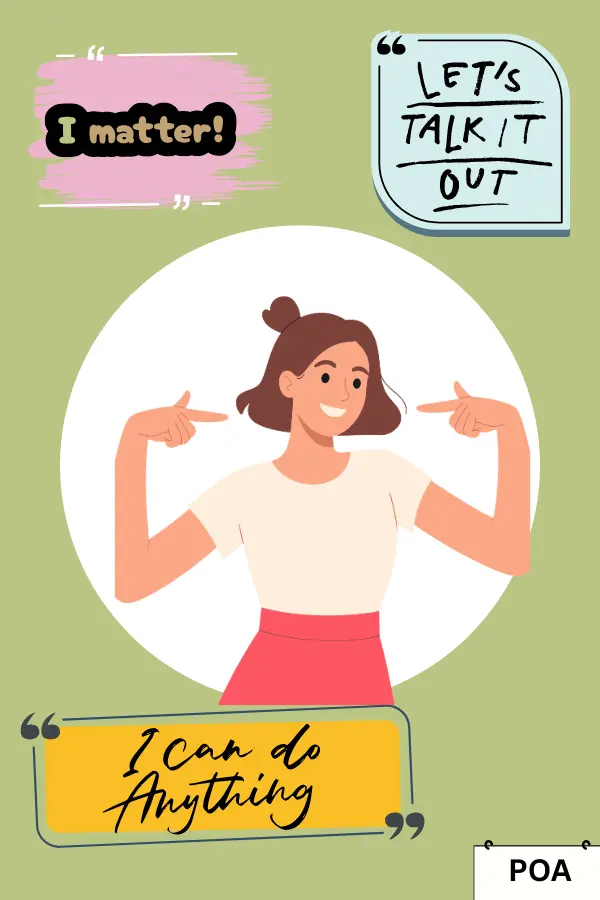
I am a psychologist who studies the patterns of self-talk, inner dialogue, and their impact on mental health and personal growth. Read this article till the end to discover how your inner voice shapes your thoughts, emotions, confidence, and success, along with practical strategies for developing healthier and more constructive self-talk.
What Is Self-Talk?
Self-talk is the internal dialogue occurring in an individual's mind. It's a cognitive process involving thoughts, beliefs, and interpretations that help regulate emotions throughout daily experiences. This dialogue can be empowering or damaging, depending on its content.
Examples of self-talk include:
- "I can do this."
- "I'm going to fail."
- "I always make mistakes."
- "This is difficult, but I can learn."
- "Nobody likes me."
- "I'll find a solution."
While these thoughts may seem innocuous, their impact on emotional states and behaviors is profound. Often, people are harsher in their self-talk than they would be toward a friend, which can be detrimental to emotional well-being.
The Origins of Self-Talk
Self-talk is shaped by various life experiences, relationships, cultural influences, and personal beliefs.
Childhood Experiences
A significant portion of self-talk originates in childhood. Children absorb messages from:
- Parents
- Teachers
- Siblings
- Peers
- Authority Figures
For instance, a child who is frequently praised for effort may grow up adopting a self-talk narrative like, "I can improve through practice." In contrast, a child who experiences repeated criticism may internalize beliefs such as, "I'm never good enough." Over time, these formative messages create the basis for adult self-talk patterns.
The Inner Critic: Understanding the Negative Voice
The Inner Critic is the part of the mind focused on weaknesses, mistakes, perceived failures, and potential threats. While it initially develops as a protective mechanism to avert rejection or embarrassment, it often turns excessively critical and debilitating.
Common statements from the Inner Critic include:
- "You're not smart enough."
- "You'll never succeed."
- "Everyone is judging you."
- "Don't even try."
- "You're going to fail."
Common characteristics of the Inner Critic include:
- Focus on mistakes
- Magnifying failures
- Minimizing successes
- Creating fear of judgment
- Encouraging perfectionism
- Predicting negative outcomes
Though its primary aim is protection, the Inner Critic often generates anxiety, stress, and diminished self-esteem.
The Psychological Consequences of an Overactive Inner Critic
1. Increased Anxiety
Negative self-talk activates the brain's threat detection systems. When individuals tell themselves, "Something bad will happen" or "I can't handle this," it triggers a physiological response akin to facing real danger.
2. Depression and Hopelessness
Research links persistent negative self-talk to depression. This self-criticism can create beliefs such as "I'm worthless" or "Nothing will ever change."
3. Perfectionism
Many perfectionists are driven by a potent Inner Critic, which enforces beliefs that mistakes are unacceptable and success must be flawless.
4. Reduced Confidence
Continuous self-criticism undermines self-belief and may cause individuals to avoid opportunities and challenges.
The Inner Coach: The Healthy Alternative
In contrast to the Inner Critic, the Inner Coach embodies a positive and balanced internal voice. Instead of ignoring mistakes, the Inner Coach responds to challenges with encouragement, perspective, and compassion.
Examples of supportive self-talk include:
- "This is difficult, but I can learn."
- "Mistakes help me grow."
- "I have overcome challenges before."
- "I can improve with practice."
Characteristics of the Inner Coach
The Inner Coach encourages growth and promotes realistic thinking. It builds confidence, supports emotional resilience, focuses on solutions, and practices self-compassion.
Research Findings on Self-Talk
Research Finding 1: Self-Talk and Performance
Psychologist Ethan Kross and his colleagues found that supportive self-talk enhances emotional regulation and performance under stress.
Research Finding 2: Self-Compassion and Mental Health
Dr. Kristin Neff's research suggests that self-compassion correlates with lower levels of anxiety and depression, greater emotional resilience, and improved psychological well-being.
Research Finding 3: Cognitive Patterns and Depression
Studies in Cognitive Behavioral Therapy (CBT) reveal that negative automatic thoughts contribute to depression and anxiety disorders.
How Self-Talk Influences Mental Health
Anxiety Disorders
Individuals suffering from anxiety often engage in catastrophic self-talk such as, "I won't be able to cope" or "Something terrible will happen."
Depression
Depression frequently involves negative internal narratives like, "I'm worthless" or "Nothing matters."
Stress Management
The interpretation of stress directly affects emotional experiences. The Inner Critic might say, “This is too much,” while the Inner Coach offers the perspective, “This is challenging, but manageable.”
How Self-Talk Influences Success
Motivation
Individuals who use supportive self-talk are more likely to take action and persist through difficulties.
Resilience
Resilience is promoted by the Inner Coach, which reframes failures as opportunities for growth.
Confidence
Confidence blossoms when individuals reinforce positive beliefs about their capabilities.
Decision-Making
Supportive self-dialogue encourages thoughtful action and engagement.
Therapeutic Approaches to Improving Self-Talk
- Cognitive Behavioral Therapy (CBT): Helps identify and challenge distorted thoughts.
- Self-Compassion Therapy: Encourages kindness toward oneself.
- Mindfulness-Based Therapy: Teaches awareness of thoughts without becoming trapped by them.
- Acceptance and Commitment Therapy (ACT): Promotes psychological flexibility and values-based action.
Practical Strategies for Strengthening the Inner Coach
- Notice Your Self-Talk
- Challenge Negative Thoughts
- Practice Self-Compassion
- Use Supportive Language
- Keep a Success Journal
- Surround Yourself with Positive Influences
Common Myths About Positive Self-Talk
Myth 1: Positive Self-Talk Means Ignoring Problems
Healthy self-talk recognizes challenges while maintaining a hopeful perspective.
Myth 2: Self-Criticism Motivates Success
Research shows excessive self-criticism often reduces motivation and increases anxiety.
Myth 3: Self-Talk Cannot Be Changed
Self-talk patterns can be modified through awareness, practice, and therapeutic intervention.
The Therapist's Perspective on Inner Transformation
Therapists often observe that individuals' greatest obstacles are not external circumstances but their internal narratives.
- Greater confidence
- Improved emotional health
- Enhanced relationships
- Increased resilience
- Better performance
Conclusion
Self-talk wields immense influence over mental health and success. The ongoing dialogue between the Inner Critic and the Inner Coach shapes emotions, confidence, behaviors, resilience, and overall well-being.
Research consistently affirms that positive self-talk is associated with better emotional regulation, improved mental health, stronger resilience, and greater success.
Ultimately, the voice you hear most often is your own. Whether it becomes your harshest critic or your greatest ally can dramatically influence your mental health, happiness, and overall success.
📚 Refrences:
- Kross, E., et al. (2014). Self-talk as a regulatory mechanism. (For Research finding 1 ).
- Neff, K. D. (2003). Self-compassion: An alternative conceptualization of a healthy attitude toward oneself. (For Research finding 2).
- Beck, A. T. (1979). Cognitive Therapy and the Emotional Disorders. (For Research finding 3).