
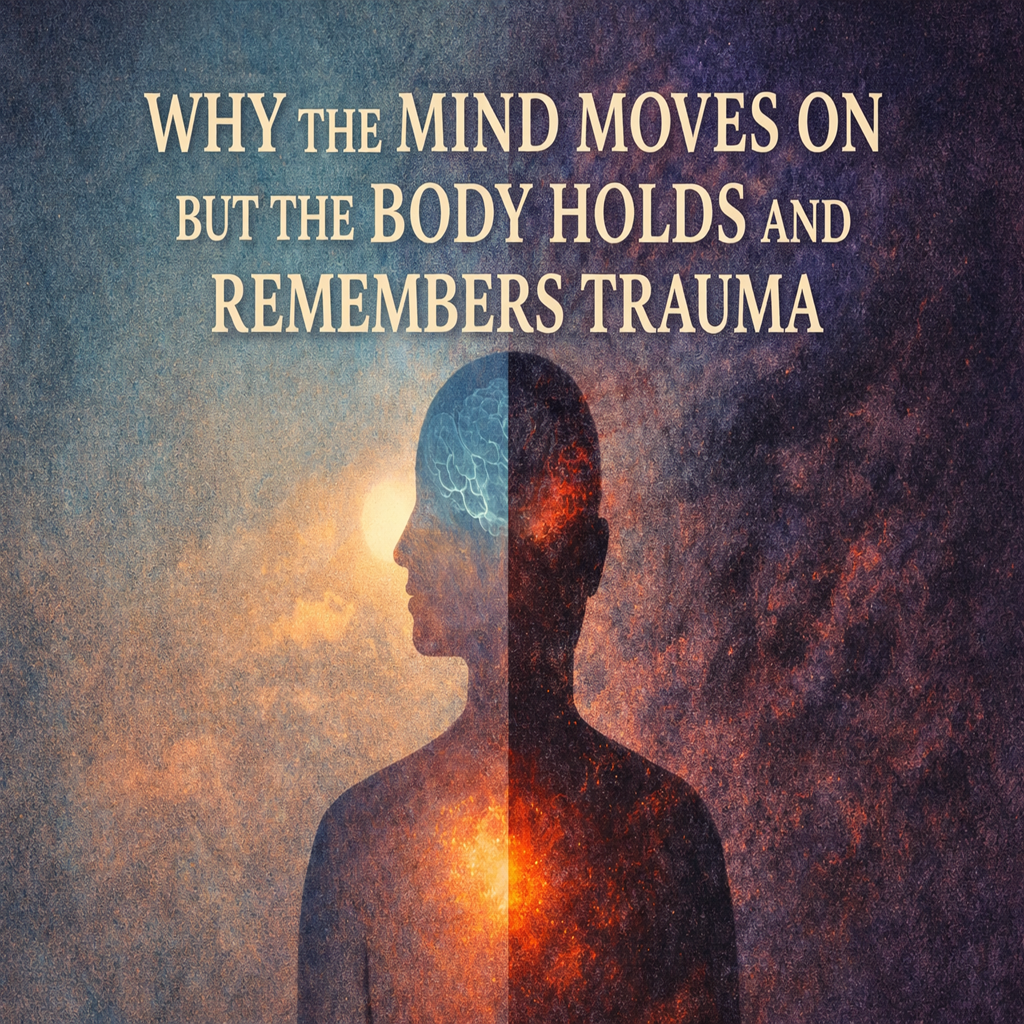
Why the Mind Moves On but the Body Holds and Remembers Trauma
When Healing Feels Incomplete
Many of us find ourselves in a perplexing maze on our healing journey. We may sit in a therapist's office, talking through painful memories and experiences, feeling a sense of relief and forgiveness wash over us. Our minds may tell us that we have made tremendous strides and have genuinely moved on from those past traumas. Yet, often, our bodies tell a different story.
Have you ever noticed how your shoulders feel tight, your jaw is clenched, or there's an underlying current of anxiety that surfaces unexpectedly? You might find yourself fatigued, tinged with emotional reactions that seem out of sync with the current moment. This disconnect between your thoughts and your physical sensations leads to a puzzling question:
If I feel okay in my mind, why does my body still react as if the trauma is happening?
The answer to this question lies in understanding how trauma is stored—intricately woven into the fabric of our minds and bodies. Healing encompasses much more than simple cognitive acknowledgment; it demands an inward journey, a reconnection of the mind and body.
Trauma is More Than Just a Memory
Trauma isn't merely about the events that transpired in our lives. It is deeply rooted in our inability to process emotional overload at critical moments of distress. When a catastrophic experience unfolds—be it emotional neglect, abuse, or profound loss—our bodies instinctively prepare for action. In these life-altering moments, several physiological responses occur:
1. Our body gets ready to fight, flee, freeze, or submit: This primal response sets in, dictating how our body mobilizes to handle perceived danger.
2. Stress hormones:Chemicals like adrenaline and cortisol surge into our bloodstream, preparing us for confrontation or escape.
3. Muscles Tension: To react effectively to danger, our muscles tighten in readiness.
4. Altered Breathing: Breathing becomes rapid and shallow, reflecting our heightened state of alertness.
5. Narrowed Awareness:Our perception narrows, sharply focusing on the immediate threat while filtering out everything else.
Learn more about Therapeutic Interventions and how can How to heal your past life trauma?
When the situation prevents us from fully responding—perhaps due to physical constraints or emotional inadequacies—this energy from our traumatic response becomes trapped within us. Although our minds can reinterpret the past and make rational sense of it over time, our bodies retain a visceral memory of those overwhelming feelings. Hence, talking about trauma often feels like only scratching the surface; it is not enough to heal unless we also address these physical manifestations.
Why Our Minds Heal Faster Than Our Bodies?
Understanding the complex interplay between mind and body helps shed light on why healing tends to be more rapid in our mental spaces compared to physical experiences.
1. The Mind and Stories
Our minds have an extraordinary ability to create narratives. We build meaning from our experiences, molding our memories into cohesive stories. It can be as simple as saying to ourselves, “That was then; this is now.” When we believe we understand the past and can compartmentalize it, we often feel as if we have successfully completed our healing journey.
2. The Body and Sensations
Contrastingly, our bodies do not comprehend stories or narratives. They react to sensations, rhythms, and the innate sense of safety or danger. If our nervous system continually perceives a threat—whether that be emotional, psychological, or physical—it persists in a heightened state of alertness. This dissonance between our thoughts and bodily reactions can create an internal split, leading us into confusion and frustration.
How Trauma Sits in Our Bodies?
Trauma leaves its mark long after the actual events have passed; it embeds itself within our physical being. Understanding how trauma sits within us requires keen awareness of the various manifestations in our bodies:
1. Muscles and Tension
Unexpressed emotions—fear, anger, or grief—often find residence in specific areas of the body, leading to physical discomfort or pain. For instance, tight shoulders can signify the burdens we carry, while a clenched jaw might indicate suppressed feelings longing for expression.
- Shoulders:Carrying a metaphorical weight.
- Jaw:A manifestation of held-back emotions.
- Chest:Frequently tied to rage or profound sadness.
- Gut: Often reflects anxiety or fear.
- Hips :Symbolize control and may house unresolved emotional energy.
2. The Nervous System
Trauma can unfurl chaos within our nervous system, creating an imbalance that may lead to anxiety or feelings of numbness altogether. A dysregulated nervous system can hinder our ability to relax and feel safe within our own skin.
3. Breathing Patterns
Many individuals experiencing unresolved trauma engage in shallow breathing, perpetuating a cycle of tension and alertness. This type of breathing denies the body the opportunity to relax, shrouding it in continuous stress and contributing to overall discomfort.
4. Implicit Memory
Trauma is also ensconced in our bodies as implicit memories—feelings and sensations that we may not fully understand or recognize. Our bodies might automatically react to certain triggers or stimuli, sensing danger even when our rational minds recognize that we are perfectly safe.
What Happens to Our Stored Emotions?
Emotions that remain unexpressed persist—they don’t simply evaporate into thin air. Instead, they accumulate as suppressed energy within our bodies, leading to various physical and emotional ailments. These emotions manifest in various ways:
1. Unexpressed Anger:
This can lead to chronic tension or unbearable headaches, signaling to us that something is unresolved.
2. Unresolved Grief:
Often surfaces as a nagging heaviness or overwhelming fatigue, reminding us of what still needs to be processed in our emotional landscape.
3. Fear:
Unexpressed fear can manifest in digestive problems or chronic restlessness, making it difficult to find peace in daily life.
4. Shame:
Frequent expressions of shame can show up as slumped posture, low energy, or withdrawal from social interactions, all indicating the psychological burdens that weigh heavily upon us.
These responses are not mere inconveniences; they convey messages: they ask for acknowledgment and resolution. Ignoring them often leads to intensified internal conflict.
Why Just Talking Isn’t Enough?
While conversation can be beneficial and provide cognitive insights, it mainly stimulates the thinking part of our brain. Since trauma is embedded deeply within our physiological responses, words alone are often inadequate. Many individuals, despite multiple discussions and self-reflection, still feel the lingering effects of trauma. This highlights a critical truth: true healing also necessitates the experience of safety and fulfillment through somatic sensations.
Ways to Help Release Stored Emotions
Understanding the physical manifestations of trauma is the first step toward healing. Let’s explore practical strategies to facilitate healing and allow our bodies to release stored emotions.
1. Become Aware of Your Body:
Instead of asking, “Why do I feel this?” shift your inquiry to, “Where do I feel this?” By sitting quietly with yourself and tuning in, you can begin to uncover specific sensations like tightness, warmth, or heaviness within your body. Acknowledging these feelings helps signal to your body that it is safe to express and process your emotions.
2. Practice Regulated Breathing:
Breathwork can be a powerful tool for calming the nervous system. Try a simple breathing exercise: inhale slowly through your nose for a count of four, allowing your belly to rise; pause for just a moment; then exhale gently through your mouth for six to eight counts. Focus on gradually lengthening your exhales, allowing each breath to melt away tension and promote relaxation.
3. Engage in Gentle Movement:
Movement serves as a vital component in the healing process. Though it doesn’t require intense workouts, seeking gentle activities can be tremendously beneficial. Consider yoga, stretching exercises, or even body shakes that permit stored tension to release. Movement helps reconnect you with your body and creates a sense of agency.
4. Explore Mindfulness Practices:
Mindfulness can serve as an anchor in the present moment. Engaging in practices such as meditation, body scans, or focused breathing facilitates a deeper sense of awareness and reduces anxiety. Explore activities that teach you to engage with your sensations in a calm and focused manner.
5. Seek Professional Support:
Therapeutic modalities such as somatic experiencing, trauma-focused therapy, or art therapy can be incredibly effective in addressing trauma held in the body. These approaches focus on tapping into the somatic experience, allowing you to work through unprocessed emotions in a safe and nurturing environment.
By incorporating these practices into your daily life, you can begin to bridge the gap between your mind and body. Through patience, awareness, and nurturing exercises, the road to healing can shift from a daunting task to a liberating journey.
Conclusion: The Body Is Not Broken — It Is Wise
If your body continues to bear the weight of trauma, recognize that it does not signify failure. Instead, it indicates your body's intelligence—a protective mechanism striving to keep you safe. When your body signals discomfort, it is not out to punish you; rather, it seeks to shield you from further harm.
In this intricate journey of healing, remember: you are never alone. By cultivating a loving relationship with your body, you open the door to profound transformation and restoration. Allow your body’s wisdom to guide you back to a place of wholeness, and together, let us affirm that healing is possible. Your internal narrative matters, and every step you take is a testament to your resilience and courage.
Healing happens not when you force the body to forget, but when you help it finally feel safe enough to let go.