
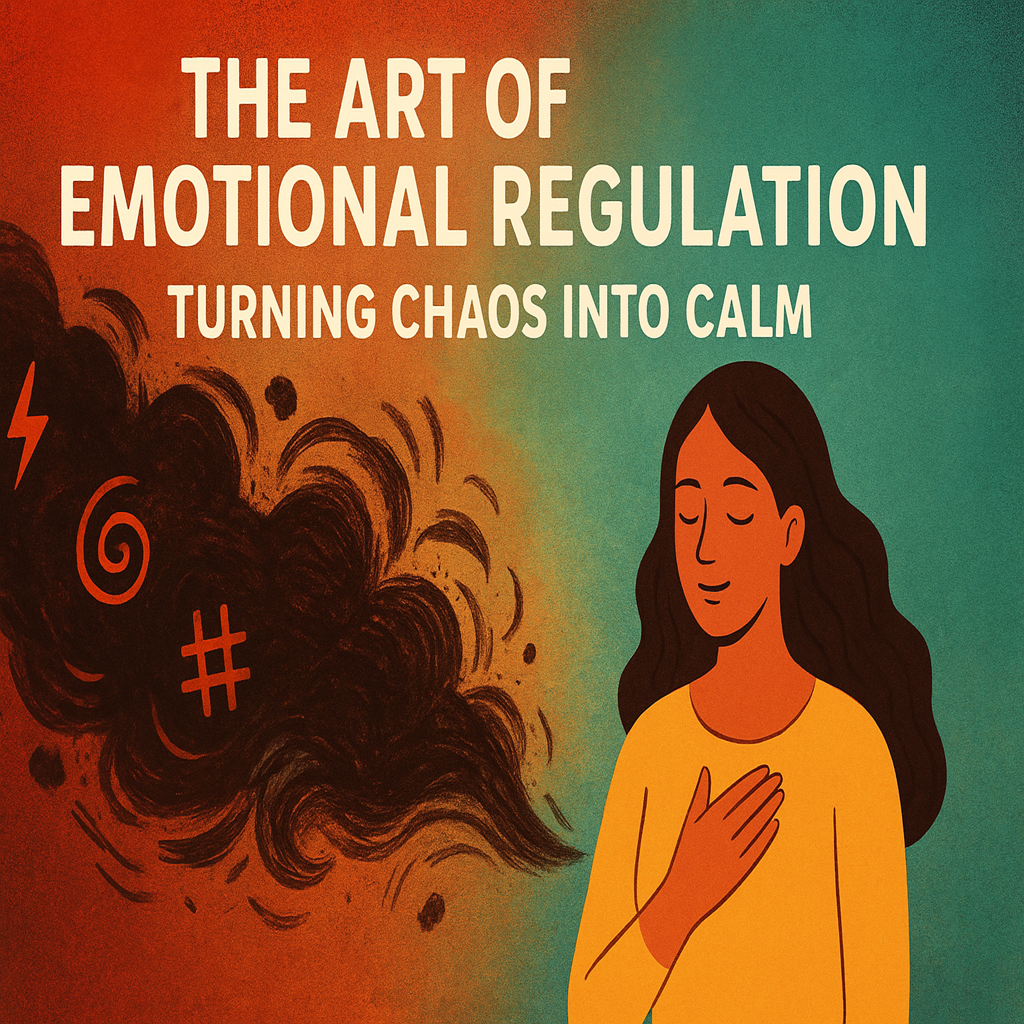
The Art of Emotional Regulation: Turning Chaos into Calm
The Art of Emotional Regulation: Turning Chaos into Calm
Have you ever reacted to a small comment as if it were a personal attack, replayed an uncomfortable conversation for hours, or said something in anger that you later regretted? These experiences are part of everyday human life. Emotions can arrive quickly, feel intense, and influence our decisions before we have had time to understand what is happening.
Emotional regulation is the ability to notice, understand, and manage emotional responses in ways that support our needs, values, and circumstances. It does not mean eliminating sadness, suppressing anger, or pretending to be calm when we are hurting. It means developing enough awareness and flexibility to choose how we respond rather than allowing every feeling to dictate our next action.
Emotions provide information. Fear may alert us to a possible threat, anger may signal that a boundary feels violated, and sadness may accompany loss or disappointment. The challenge is to interpret this information accurately and respond constructively instead of treating the first emotional interpretation as the complete truth.
What Is Emotional Regulation?
Emotional regulation refers to the processes through which people influence which emotions they experience, when they experience them, and how they express or manage them. Regulation can happen before an emotional response becomes intense, while the feeling is unfolding, or after an event when we reflect on what happened.
For example, someone preparing for a difficult conversation may plan what they want to say before entering the room. During the conversation, they may pause when they notice their voice becoming tense. Later, they may reflect on what went well and what they want to handle differently next time.
These are different opportunities to regulate an emotional response. No single technique works for every situation, and healthy regulation depends on the context. A person may need calm breathing during ordinary stress, direct communication during conflict, or immediate safety measures when facing a genuine threat.
Emotional Regulation Is Not Emotional Suppression
Emotional suppression involves trying to hide or inhibit the outward expression of a feeling. Sometimes temporarily holding back a reaction is appropriate, especially when expressing it immediately would be unsafe or unhelpful. However, repeatedly denying emotions can make it harder to understand personal needs and may leave unresolved concerns untouched.
Regulation is different. You can acknowledge anger without shouting, experience fear while taking a necessary step, or feel sadness without deciding that your life is hopeless. The goal is not to control every emotion perfectly. It is to create a space between feeling and action.
Think of an emotion as a message arriving at your door. You can listen to the message, evaluate whether it is accurate, and decide what to do. You do not have to hand the visitor the keys to your entire house.
Why Do Emotions Sometimes Feel Overwhelming?
1. Stress and Emotional Overload
When people face ongoing demands, uncertainty, poor sleep, conflict, or limited recovery time, they may have less patience and find it harder to think flexibly. A minor inconvenience can then feel like the final problem in a long series of difficulties.
Stress can also affect attention. When the mind is occupied with possible threats or unresolved concerns, it may focus on negative information and overlook alternative explanations. This can make a difficult situation feel even more threatening than it initially appeared.
Read more about the relationship between prolonged pressure and wellbeing in Stress and Aging and Brain Fog in the Digital Age: Stress, Screens, and Sleep.
2. Automatic Interpretations
People do not respond only to events. They also respond to the meaning they assign to events. If a friend does not reply to a message, one person may think the friend is busy, while another may immediately conclude that they are being rejected.
The feeling that follows can be intense even though the interpretation has not been confirmed. Learning to distinguish an observable fact from an assumption helps prevent an initial thought from becoming an unquestioned conclusion.
3. Learned Emotional Habits
Some people learned to express anger loudly because that was normal in their environment. Others learned to remain silent, avoid disagreement, or hide distress to keep the peace. These habits may once have helped them cope, but they can become limiting when used automatically in every situation.
Understanding a learned pattern does not mean blaming the past or assuming that childhood explains everything. It simply provides another possibility to explore while considering current stress, relationships, personal beliefs, and the surrounding environment.
The Connection Between Thoughts, Feelings, and Actions
A useful way to examine an emotional episode is to separate the event, the interpretation, the feeling, and the response.
- Event: What objectively happened?
- Interpretation: What meaning did I give it?
- Emotion: What did I feel, and how intense was it?
- Action: What did I do or feel tempted to do?
- Outcome: Did my response help the situation or make it harder?
Imagine that a colleague criticizes your work. The event is the feedback. Your interpretation might be that you are incompetent or that the colleague wants to embarrass you. You may feel shame or anger and respond defensively. But another interpretation is possible: the feedback may contain useful information, even if the delivery was uncomfortable.
This does not mean all criticism is fair. It means that pausing to examine the evidence can help you decide whether to learn from the feedback, ask for clarification, or establish a boundary.
For more on observing internal dialogue, explore Self-Talk and the Subconscious Mind.
Practical Techniques for Emotional Regulation
1. Name the Emotion
When an emotion feels confusing, describe it as specifically as possible. Instead of saying that you feel bad, consider whether you feel disappointed, embarrassed, threatened, lonely, frustrated, jealous, or uncertain.
Naming the emotion helps you identify what may need attention. If you feel disappointed, you may need to adjust an expectation. If you feel threatened, you may need more information or a sense of safety. If you feel frustrated, you may need to solve a problem or communicate a boundary.
2. Pause Before Responding
When possible, create a short pause between an emotional impulse and an action. Put down your phone, relax your shoulders, take a few comfortable breaths, or tell the other person that you need a moment before continuing.
A pause is not an obligation to remain silent forever. It is a way to avoid making an important decision at the peak of an emotional reaction. If the situation is unsafe, focus on getting to safety rather than trying to complete a regulation exercise.
3. Use Gentle, Comfortable Breathing
Some people find slow, comfortable breathing helpful during stress. Breathe naturally and gently, allowing the exhale to be relaxed without forcing deep breaths or holding your breath. If focusing on breathing makes you uncomfortable or dizzy, stop and try grounding through your surroundings instead.
Breathing is a coping tool, not a cure for every emotional or medical problem. It may help create a moment of steadiness, but it does not remove the need to address the cause of ongoing stress.
4. Challenge the First Interpretation
Ask yourself: What evidence supports my thought? What evidence might not support it? What else could explain this situation? What would I say to someone I care about if they were having the same thought?
The purpose is not to force positive thinking. It is to develop a more balanced interpretation that takes the available evidence into account.
5. Use Grounding Through the Senses
If your thoughts are racing, bring attention to the present environment. Notice a few things you can see, hear, and physically feel. Feel your feet against the floor or describe the objects around you in simple detail.
Grounding may help redirect attention away from repetitive thoughts. If it does not help, choose another method rather than assuming that you are doing it incorrectly.
6. Choose an Action That Matches Your Values
Ask yourself what kind of response you want to stand behind after the emotion has settled. You may choose to speak honestly without insulting someone, take a break instead of escalating an argument, or ask for clarification instead of assuming rejection.
Values-based action does not mean accepting unfair treatment. It means choosing an effective response while respecting your own needs and the rights of others.
Emotional Regulation in Relationships
Relationships often bring strong feelings because they involve attachment, trust, expectations, and vulnerability. When someone feels ignored, criticized, or misunderstood, they may attack, withdraw, overexplain, or agree to things they do not want.
A more constructive approach is to describe the situation, express the feeling, and make a clear request. For example: I felt disappointed when our plans changed without warning. Could you let me know earlier next time?
This approach does not guarantee agreement, but it gives the other person a clearer opportunity to understand the concern. Healthy communication also includes listening, respecting boundaries, and recognizing when a disagreement cannot be resolved immediately.
Explore Healthy Relationship Tips for more ideas about communication and mutual respect. For patterns involving hidden emotions or strong reactions, see Shadow Work: Hidden Emotions and Personality Patterns.
Building Emotional Intelligence Over Time
Emotional intelligence includes recognizing emotions, understanding how they affect behavior, and responding thoughtfully to the emotions of other people. It does not mean always knowing what everyone feels or remaining calm in every situation.
You can strengthen emotional awareness by reviewing difficult moments without insulting yourself. Ask what triggered the reaction, what need or concern may have been involved, what helped, and what you could try next time.
Progress may look like noticing anger earlier, recovering more quickly after a disagreement, asking for clarification instead of assuming the worst, or apologizing when your behavior harms someone. These small changes can be more meaningful than expecting yourself never to feel upset.
Common Mistakes When Trying to Control Emotions
- Expecting instant calm: Emotional skills develop through practice, and some situations remain genuinely difficult.
- Judging yourself for feeling: Emotions are experiences, not automatic proof of personal failure.
- Using positive thinking to deny reality: A balanced response acknowledges real problems and possible solutions.
- Taking responsibility for everyones emotions: You can communicate respectfully without controlling how others react.
- Ignoring the cause: Coping skills help, but recurring conflict, excessive workload, unsafe environments, and unmet needs may also require action.
When Professional Support May Help
If emotional reactions repeatedly interfere with relationships, work, sleep, or daily functioning, consider speaking with a qualified mental health professional. Persistent anxiety, depression, trauma-related symptoms, or frequent loss of control may benefit from a proper assessment and evidence-based support.
Seeking help is not a sign that you have failed at emotional regulation. It can be a practical way to understand your experiences and learn skills suited to your circumstances.
Conclusion: From Emotional Reaction to Conscious Response
Emotional regulation is not about becoming emotionless. It is about recognizing what you feel, understanding the story you are telling yourself, and deciding how to respond in a way that supports your wellbeing and values.
Begin with one manageable step: name the emotion, pause briefly, check your interpretation, and choose the next action deliberately. With practice, difficult feelings can become opportunities for understanding rather than automatic instructions for behavior.
Continue exploring the mind and behavior through Neuroplasticity: How Small Brain Exercises Can Boost Memory and Focus and Cyberpsychology and Digital Behavior.
Editorial note: This article is for educational purposes and is not a substitute for individualized mental health care.