
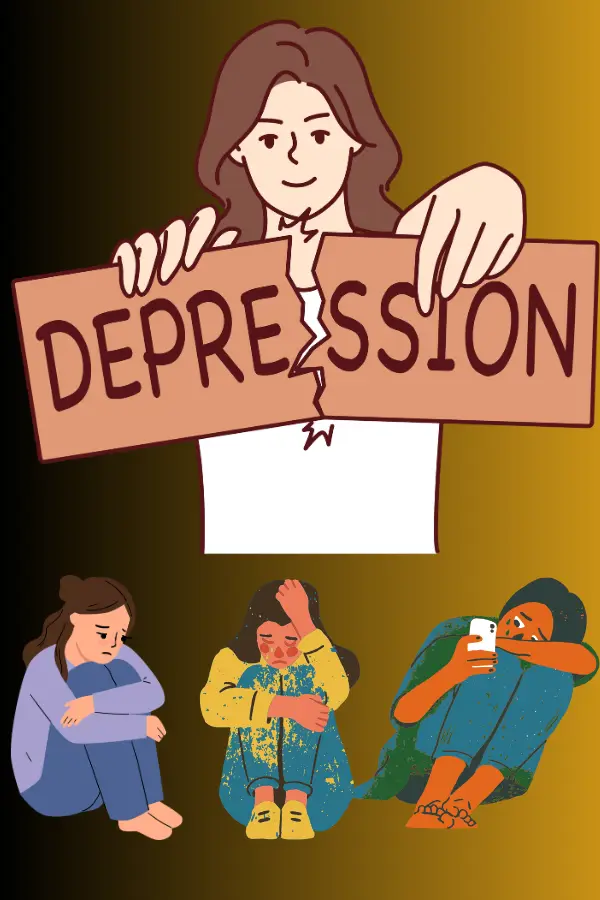
Some people walk into work every morning, answer messages, meet deadlines, take care of their families, attend social gatherings, and even make other people laugh—while privately feeling emotionally exhausted, disconnected, or empty.
From the outside, everything appears normal.
Inside, however, something feels different.
They may wake up tired despite sleeping. They may accomplish everything on their to-do list but feel no satisfaction afterward. They may smile when someone asks, "How are you?" while silently thinking, "I don't even know how to explain what I'm feeling."
This experience is often described as "high-functioning depression." It is an understandable and relatable term, but it is important to clarify that high-functioning depression is not a formal clinical diagnosis. A mental-health professional may instead assess whether a person meets criteria for conditions such as persistent depressive disorder (PDD), major depressive disorder, or another condition.
Persistent depressive disorder is characterized by a chronic depressed mood and other depressive symptoms lasting for a prolonged period. The National Institute of Mental Health reports that an estimated 1.5% of U.S. adults experienced persistent depressive disorder in a given year, while about 2.5% experience it at some point in their lives [1].
The important psychological question, therefore, is not simply, "Does this person look depressed?"
It is:
"How is this person actually experiencing life when nobody is watching?"
What Does "High-Functioning Depression" Mean?
The phrase high-functioning depression generally describes someone who experiences depressive symptoms while continuing to perform many everyday responsibilities.
They may:
- Go to work regularly.
- Maintain relationships.
- Look after children or family members.
- Complete academic responsibilities.
- Exercise or maintain routines.
- Socialize occasionally.
- Appear cheerful.
- Meet deadlines.
- Continue pursuing goals.
Yet internally, they may experience:
- Persistent sadness or emptiness.
- Low energy.
- Loss of pleasure.
- Emotional numbness.
- Self-criticism.
- Irritability.
- Difficulty concentrating.
- Feelings of hopelessness.
- Sleep disturbances.
- A sense that life has lost its meaning.
The important distinction is that functioning does not necessarily mean feeling well.
A person can be highly productive and psychologically distressed at the same time.
Why Is It So Difficult to Recognize?
One reason this form of depression can remain hidden is that people often associate depression with obvious behaviors.
They imagine someone who:
- Cannot get out of bed.
- Stops working.
- Withdraws completely.
- Cries frequently.
- Stops taking care of themselves.
Those experiences can certainly occur with depression, but depression does not always look like that.
Some people continue functioning because they have developed extremely strong coping mechanisms.
They may tell themselves:
"I just need to keep going."
And they do.
They keep going for months or even years.
But constantly functioning through emotional pain can come at a psychological cost.
The Difference Between Functioning and Flourishing
From a therapist's perspective, one of the most important distinctions is between functioning and flourishing.
Functioning means:
"I am getting things done."
Flourishing means:
"I am emotionally connected to my life."
A person may successfully complete their responsibilities while experiencing little joy, meaning, or emotional connection.
For example, someone might receive a promotion and immediately think:
"I should be happy about this."
But instead of excitement, they feel nothing.
This can be a sign of anhedonia (an-hee-DOH-nee-uh), meaning a reduced ability to experience pleasure or interest in things that were previously enjoyable.
Anhedonia is an important depressive symptom and should not simply be dismissed as laziness or ingratitude.
"But My Life Is Fine. Why Do I Feel This Way?"
This is one of the questions therapists frequently encounter.
A person may say:
- "I have a good job."
- "My family loves me."
- "Nothing terrible is happening."
- "Other people have much bigger problems."
- "So why do I feel empty?"
The answer is that psychological suffering does not always correspond directly to external circumstances.
Depression can involve changes in mood, motivation, thinking, sleep, appetite, concentration, energy, and the ability to experience pleasure. The National Institute of Mental Health notes that depression can involve persistent sadness or loss of interest or pleasure alongside changes in sleep, appetite, energy, concentration, and feelings about oneself [3].
The absence of an obvious external crisis does not invalidate someone's internal experience.
The Psychology Behind High-Functioning Depression
1. Perfectionism
Perfectionism can become a powerful coping strategy.
A person may believe:
"If I keep achieving, nobody will notice that I'm struggling."
Achievement becomes a way of maintaining control and protecting self-esteem.
They may constantly:
- Work harder.
- Set higher standards.
- Avoid mistakes.
- Compare themselves with others.
- Feel guilty when resting.
Eventually, achievement stops producing satisfaction and becomes an obligation.
2. People-Pleasing
Some individuals cope with emotional pain by focusing intensely on other people's needs.
They become:
- Reliable friends.
- Helpful colleagues.
- Responsible family members.
- Emotional supporters.
Everyone depends on them.
But they rarely ask:
"Who takes care of me?"
This pattern can create emotional exhaustion because the person learns to suppress their own needs to maintain harmony around them.
3. Emotional Suppression
Another psychological mechanism is emotional suppression.
Someone may have learned early in life:
- "Don't complain."
- "Be strong."
- "Other people have it worse."
- "You have to keep going."
- "Crying won't solve anything."
Eventually, emotional suppression can become automatic.
Instead of processing sadness, anger, grief, disappointment, or fear, the person continues functioning.
The emotions do not necessarily disappear. They may instead emerge as:
- Irritability.
- Fatigue.
- Emotional numbness.
- Sleep problems.
- Withdrawal.
- Physical tension.
4. Chronic Stress
Long-term stress can contribute to emotional exhaustion and depressive symptoms.
Someone may spend years dealing with:
- Workplace pressure.
- Financial concerns.
- Relationship problems.
- Caregiving.
- Academic expectations.
- Family responsibilities.
Eventually, the person may continue performing while having less emotional energy available for life outside their responsibilities.
5. Negative Self-Talk
High-functioning individuals may have an extremely critical internal voice.
Their thoughts might sound like:
- "You should be doing more."
- "Stop being lazy."
- "Other people manage their lives better."
- "You have no reason to complain."
This internal criticism can make depression even harder to recognize because the individual interprets symptoms as personal failures rather than possible signs of psychological distress.
6. Loss of Meaning
Sometimes the problem is not simply sadness.
It is a loss of meaning.
A person may ask:
"What am I doing all of this for?"
They continue working, earning, achieving, and maintaining responsibilities—but the activities no longer feel personally meaningful.
This is why therapists often explore not only symptoms but also:
- Values.
- Purpose.
- Relationships.
- Identity.
- Personal fulfillment.
Signs That Should Not Be Ignored
High-functioning depression can hide behind apparently normal behavior.
Emotional Signs:
- Feeling empty rather than sad.
- Emotional numbness.
- Persistent irritability.
- Feeling disconnected from others.
- Loss of enthusiasm.
- Frequent feelings of guilt.
Behavioral Signs:
- Working excessively.
- Avoiding emotional conversations.
- Staying constantly busy.
- Losing interest in hobbies.
- Socializing while feeling emotionally detached.
- Using productivity to avoid difficult feelings.
Cognitive Signs:
- Excessive self-criticism.
- Difficulty concentrating.
- Negative expectations about the future.
- Feeling like a failure despite achievements.
- Constant comparison with others.
Physical Signs:
- Persistent fatigue.
- Sleep changes.
- Appetite changes.
- Low energy.
- Psychomotor slowing or agitation.
One symptom alone does not establish depression. What matters is the overall pattern, duration, severity, and effect on a person's life.
Research: Is "High-Functioning Depression" a Clinical Diagnosis?
This distinction is important.
High-functioning depression is not a formal diagnosis in the DSM-5-TR.
Instead, clinicians may assess whether symptoms fit a recognized depressive disorder.
One relevant condition is Persistent Depressive Disorder, formerly called dysthymia.
Research describes persistent depressive disorder as a chronic depressive condition that can be less intense than major depression while lasting much longer. A major clinical review also discusses its chronic nature, correlates, and clinical implications [2].
Research Finding: Persistent Depression Can Still Cause Serious Impairment
According to National Institute of Mental Health data, among adults with persistent depressive disorder in the past year:
- 49.7% experienced serious impairment.
- 32.1% experienced moderate impairment.
- 18.2% experienced mild impairment [1].
These findings are important because they demonstrate that chronic depression can significantly interfere with life even when symptoms may appear less dramatic than an acute depressive episode.
Research Finding: Depression Has Multiple Causes
Researchers do not view persistent depression as having one simple cause.
A major clinical review concluded that persistent depressive disorder has multifactorial influences and may involve psychological, biological, developmental, and environmental factors [2].
Potential contributing factors may include:
- Genetic vulnerability.
- Brain biology.
- Childhood experiences.
- Chronic stress.
- Trauma.
- Personality traits.
- Social circumstances.
- Relationship difficulties.
This is why therapy should be individualized rather than based on a single explanation.
The Therapist's Perspective: Why High Functioning Can Become a Trap
A therapist may notice something interesting:
The very behaviors that helped someone survive may eventually prevent them from healing.
For example, a person learns to stay busy whenever they feel sad.
Staying busy works temporarily.
So they become even busier.
Eventually, they never give themselves enough psychological space to process what they feel.
Productivity becomes avoidance.
This creates a cycle:
Emotional pain → Staying busy → Temporary relief → Unprocessed emotions → More emotional exhaustion → More productivity
Breaking this cycle requires learning that rest and emotional processing are not signs of weakness.
How Therapy Can Help
The good news is that depression is treatable. The National Institute of Mental Health identifies psychotherapy as an important treatment for depression and describes evidence-based approaches including Cognitive Behavioral Therapy (CBT) and Interpersonal Therapy (IPT) [3][4].
1. Cognitive Behavioral Therapy (CBT)
CBT helps individuals examine the relationship between:
Thoughts → Feelings → Behaviors
For example:
Thought:
"I should be able to handle everything."
↓
Emotion:
Guilt and exhaustion.
↓
Behavior:
Overworking and avoiding rest.
A therapist may help the person challenge the underlying belief:
"Needing support does not mean I am incapable."
CBT can also address cognitive distortions such as:
- All-or-nothing thinking.
- Catastrophizing.
- Overgeneralization.
- Excessive self-blame.
2. Behavioral Activation
Behavioral activation focuses on gradually increasing meaningful and rewarding activities.
A common misconception is:
"I'll do something when I feel motivated."
Depression can sometimes work in the opposite direction.
A therapist may encourage:
Small action → Increased engagement → Possible improvement in mood → More motivation
Research supports behavioral activation as an effective intervention for adult depression. A network meta-analysis of 45 studies involving 3,382 participants found that cognitive restructuring, behavioral activation, and CBT were superior to usual care or waiting-list conditions, with no clear difference in effectiveness among the three approaches [5].
3. Interpersonal Therapy (IPT)
Interpersonal Therapy, or IPT, focuses on relationships and life transitions.
It can be useful when depressive symptoms are connected with:
- Grief.
- Relationship conflict.
- Social isolation.
- Major life changes.
- Difficulties communicating needs.
NIMH describes IPT as an evidence-based approach that addresses interpersonal and life events affecting mood while helping people improve communication and social support [4].
4. Treatment for Chronic Depression
Persistent depressive symptoms may require a longer-term and more individualized approach.
Treatment decisions depend on the individual's symptoms, duration, severity, history, and response to previous interventions.
Research on persistent depressive disorder has examined both psychological and pharmacological treatments, supporting the importance of individualized clinical assessment [6].
5. Medication May Also Be Appropriate
Psychotherapy is not the only treatment option.
Depending on the severity and duration of symptoms, a healthcare professional may recommend medication, psychotherapy, or a combination.
Research has evaluated pharmacological and psychotherapeutic treatments for persistent depressive disorder, although treatment decisions must always be individualized [6].
A person should never start, stop, or change psychiatric medication without discussing it with a qualified healthcare professional.
Personal Practices That Can Support Recovery
Therapy can be powerful, but everyday habits can also support recovery and emotional well-being.
Create Space for Yourself
If your entire life revolves around responsibilities, deliberately schedule periods where you do nothing productive.
Rest is not wasted time.
Reconnect With Pleasure
Don't wait until you feel enthusiastic. Start small.
- Listen to music.
- Take a short walk.
- Spend time in nature.
- Cook something you enjoy.
- Talk to someone you trust.
- Return to an old hobby.
The goal is not instant happiness.
The goal is reconnection.
Stop Measuring Your Worth Through Productivity
Ask yourself:
"If I accomplished nothing today, would I still believe I have value?"
This question can reveal deeply rooted beliefs about self-worth.
Your productivity is something you do. It is not the complete definition of who you are.
Learn to Say "I'm Not Okay"
For people who are accustomed to appearing strong, honesty can feel frightening.
You do not have to explain everything.
You can simply tell someone:
"I've been struggling emotionally lately."
That sentence can become the beginning of meaningful support.
Build a Support System
Isolation can make depression heavier.
Choose people who:
- Listen without immediately judging.
- Respect your boundaries.
- Take your feelings seriously.
- Encourage professional support when needed.
You do not have to tell everyone. One safe relationship can make a meaningful difference.
When Should Someone Seek Professional Help?
A person should consider speaking with a mental-health professional when symptoms are:
- Persistent.
- Increasing in intensity.
- Affecting relationships.
- Interfering with sleep.
- Affecting concentration.
- Reducing enjoyment of life.
- Making everyday responsibilities increasingly difficult.
Most importantly, you do not have to wait until you stop functioning to deserve help.
That is one of the biggest misconceptions surrounding high-functioning depression.
A Particularly Important Warning Sign
Sometimes people who appear highly functional experience thoughts such as:
- "Everyone would be better without me."
- "I don't want to be here anymore."
- "I wish I could disappear."
- Thoughts about death or suicide.
These should always be taken seriously.
If someone is experiencing suicidal thoughts, they should seek immediate help from a qualified mental-health professional, emergency medical service, or trusted person who can remain with them. A mental-health professional can also help develop a safety plan; NIMH specifically identifies safety planning as part of psychotherapy support for people experiencing self-harm or suicidal thoughts [4].
The Most Important Message From a Therapist
Perhaps the most important thing a therapist can tell someone experiencing hidden depression is:
You do not have to prove that you are suffering enough before you deserve support.
You can be successful and depressed.
You can be grateful and depressed.
You can love your family and still experience depression.
You can smile and still be struggling emotionally.
You can be productive and still need help.
Human emotions are not mathematical equations. Two seemingly contradictory experiences can exist at the same time.
Conclusion
High-functioning depression describes an experience that many people recognize: looking capable on the outside while privately feeling empty, exhausted, disconnected, or emotionally numb.
Although the term itself is not a formal clinical diagnosis, the symptoms it describes can overlap with recognized depressive conditions, particularly persistent depressive disorder. Research shows that chronic depression can produce substantial impairment even when someone continues working, maintaining responsibilities, and appearing outwardly successful [1][2].
From a psychologist's, counselor's, or therapist's perspective, the goal is not simply to help someone continue functioning.
It is to help them feel alive while functioning.
Therapy can help uncover the beliefs, emotional patterns, relationships, and experiences maintaining depression. Evidence-based approaches such as CBT, behavioral activation, and interpersonal therapy can provide practical tools for changing thoughts, behaviors, and relationships [3][4][5].
Recovery may begin with something surprisingly simple:
Stopping for a moment and admitting, "I look fine—but I don't actually feel fine."
That honesty is not weakness.
It may be the first step toward healing.
Research References
- National Institute of Mental Health (NIMH). Persistent Depressive Disorder (Dysthymic Disorder). National Institute of Mental Health. Prevalence and impairment data.
- Schramm, E., Klein, D. N., Elsaesser, M., Furukawa, T. A., & Domschke, K. (2020). Review of dysthymia and persistent depressive disorder: History, correlates, and clinical implications. The Lancet Psychiatry.
- National Institute of Mental Health (NIMH). Depression. Information on symptoms, diagnosis, and evidence-based treatments.
- National Institute of Mental Health (NIMH). Psychotherapies. Information on psychotherapy approaches including CBT, interpersonal therapy, behavioral strategies, and safety planning.
- Ciharova, M., Furukawa, T. A., Efthimiou, O., Karyotaki, E., Miguel, C., Noma, H., Cipriani, A., Riper, H., & Cuijpers, P. (2021). Cognitive restructuring, behavioral activation and cognitive-behavioral therapy in the treatment of adult depression: A network meta-analysis. Journal of Consulting and Clinical Psychology, 89(6), 563–574.
- Kriston, L., von Wolff, A., Westphal, A., Hölzel, L. P., & Härter, M. (2014). Efficacy and acceptability of acute treatments for persistent depressive disorder: A network meta-analysis. Depression and Anxiety, 31(8), 621–630.
Important: This article is intended for educational purposes and does not replace an individualized assessment or treatment from a qualified mental-health professional.