
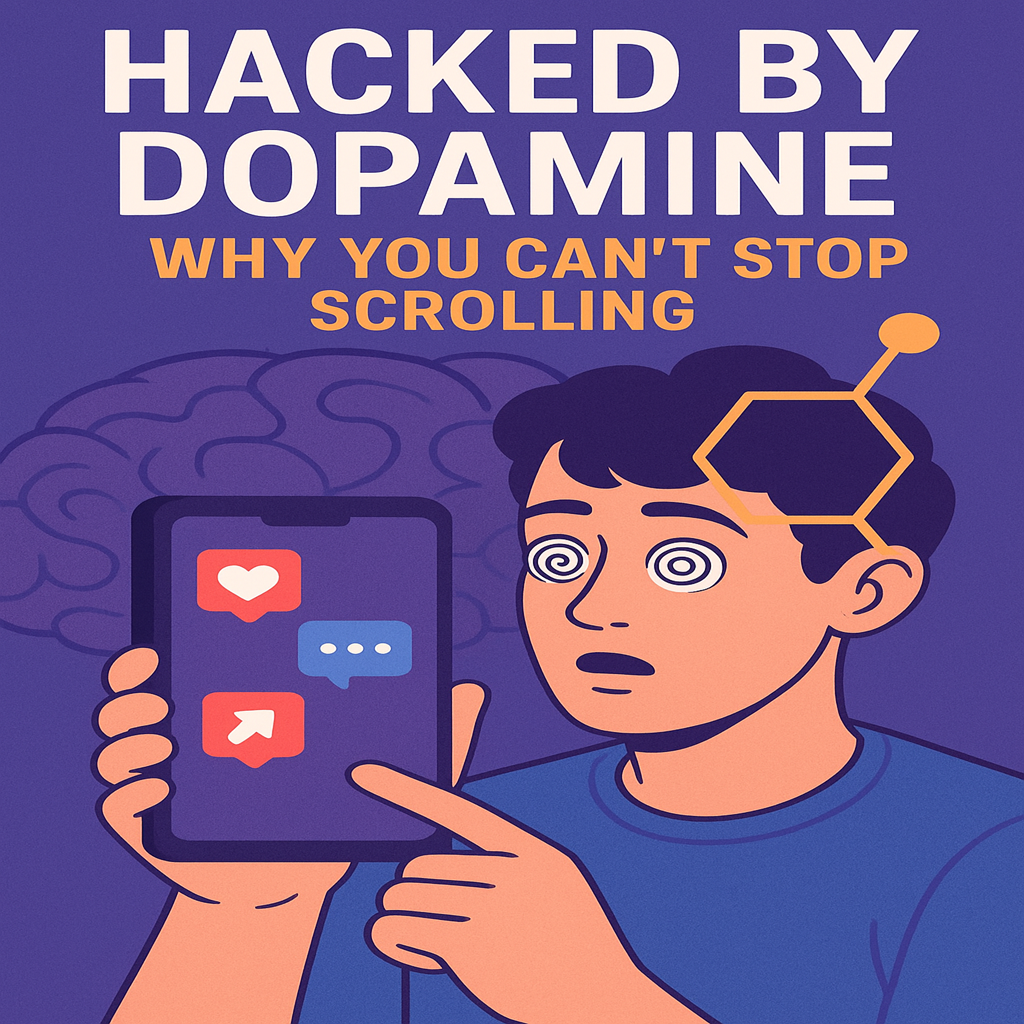
Hacked by Dopamine: Why You Can’t Stop Scrolling — Neuroscience of Social Media Addiction
It often begins with a simple intention: checking one notification, replying to a message, or watching a short video. A few minutes later, you may find yourself scrolling through an endless stream of posts without remembering why you opened the app in the first place. This experience is familiar to many people, and it raises an important psychological question: why can it be so difficult to stop?
Social media combines personalized recommendations, novelty, social feedback, and convenient access to new content. These features can encourage repeated checking and habitual use. Dopamine plays a role in motivation and learning, but it is not accurate to describe every notification as a dopamine hit or to assume that everyone who scrolls frequently has an addiction. Understanding the brain's reward system can help explain why digital habits form and how people can regain more control over their attention.
The Brain's Reward System: Understanding Dopamine
Dopamine is a chemical messenger involved in several brain functions, including motivation, learning, movement, and the processing of rewards. It is often called the pleasure chemical, but this description is incomplete. Dopamine is particularly important in processes related to anticipation, motivation, and learning from unexpected outcomes.
Imagine checking your phone and discovering a message you were hoping to receive. The possibility of finding something interesting may encourage you to check again later. Social media provides many opportunities for this kind of anticipation because the next post, message, or recommendation is not always predictable.
The important point is not that dopamine is harmful. It is a normal part of how people learn and pursue goals. The concern arises when a pattern of repeated checking begins to interfere with sleep, responsibilities, relationships, or the ability to direct attention intentionally.
The Psychology of the Scroll
Many social platforms make it easy to move from one item of content to the next. Recommendations may be personalized, videos start automatically, and new posts appear as users scroll. This convenience reduces the number of natural stopping points and can make it easier to continue using an app without making a fresh decision each time.
Behavioral psychology offers a useful way to understand this pattern. Behaviors that are occasionally followed by rewarding outcomes can persist, particularly when people do not know exactly when the next reward will appear. A user might encounter an amusing video, an interesting story, a supportive comment, or nothing particularly memorable. Because the outcome varies, checking again may feel worthwhile.
However, not every platform uses the same design, and unpredictable rewards do not affect everyone in the same way. Personal circumstances, emotional state, existing habits, and the purpose of using an app all matter.
Variable Rewards in Everyday Digital Life
Variable rewards occur when an action is followed by outcomes that differ in frequency or value. In social media use, a person may receive a meaningful message after several ordinary checks, discover a useful tutorial, or see a post that strongly captures their interest.
This pattern can encourage repeated checking because the next action might produce something rewarding. Yet the comparison with a laboratory reward experiment should not be taken too literally: social media behavior involves complex motives, social relationships, content, and conscious choices. It is more accurate to say that variable feedback may help maintain a habit than to claim that every app automatically creates addiction.
The Endless Scroll and Habit Formation
Habits often develop when a behavior is repeated in a familiar situation. A person may reach for their phone after waking up, during a break, while waiting, or whenever an uncomfortable emotion appears. The phone becomes associated with the situation, and checking can gradually feel automatic.
The endless scroll can strengthen this pattern because users do not have to decide whether to open a new page or select a new item each time. Content continues to appear, so there may be fewer reminders to pause and ask whether the activity still serves a purpose.
For example, someone who feels bored may open a social app for a moment of stimulation. If this response is repeated frequently, boredom itself may become a cue for checking. Over time, the person may find it harder to tolerate a quiet moment without reaching for the device.
Likes, Comments, and Social Feedback
Humans are social beings, and feedback from other people can be meaningful. Likes, comments, messages, and reactions may provide information about social connection or acceptance. Receiving a positive response can feel encouraging, while receiving little feedback may leave some users disappointed or uncertain.
When people begin measuring their worth primarily through online reactions, social feedback can become a source of pressure. They may repeatedly check a post, compare their engagement with others, or interpret a low number of likes as a personal rejection. These interpretations are not reliable measures of a person's value or the quality of their relationships.
A healthier approach is to treat online reactions as limited signals rather than definitive judgments. Social media can support connection, but it cannot fully replace the trust, context, and care that develop through meaningful relationships.
Why Notifications Can Be So Powerful
Notifications bring an app back into a person's attention even when they are doing something else. A sound, vibration, or visual badge can prompt curiosity: who contacted me, what happened, or am I missing something important? When checking becomes frequent, these cues may interrupt work, study, rest, and face-to-face conversations.
Not every notification is designed to manipulate users, and many provide genuinely useful information. The practical issue is whether alerts are helping the user or repeatedly pulling attention away from chosen activities. Turning off non-essential notifications and checking messages at planned times can reduce unnecessary interruptions.
When Scrolling Affects Emotional Wellbeing
Digital habits can become more difficult to manage when scrolling is used as the main response to stress, loneliness, anxiety, or sadness. Short-term distraction may feel helpful, but it does not always address the underlying problem. A person may spend more time online while postponing sleep, responsibilities, exercise, or conversations that could provide more lasting support.
Social comparison can also affect mood. A feed often contains selected moments rather than a complete picture of someone's life. Comparing ordinary experiences with carefully presented images of success, appearance, travel, or relationships may create unrealistic expectations.
If you notice that digital use regularly leaves you feeling tense or overwhelmed, reflect on what happens before and after you scroll. Our article on self-talk and its psychological effects explores how internal dialogue can influence the way we interpret our experiences. You can also read about stress and its relationship with wellbeing.
Signs Your Digital Habits Need Attention
- You frequently open an app without a clear reason.
- You intend to check something briefly but regularly spend much longer than planned.
- Scrolling repeatedly delays sleep, work, study, or household responsibilities.
- You feel unusually restless when you cannot check your phone.
- You continue using a platform even when it consistently leaves you distressed or dissatisfied.
- Online activity is displacing face-to-face interaction or activities you genuinely value.
These signs do not automatically mean that a person has a clinical addiction. They are prompts to examine whether technology use is interfering with daily life and whether a change in routine would help.
Breaking the Endless-Scrolling Cycle
1. Create Clear Stopping Points
Decide what you want to do before opening an app: reply to a message, check a particular update, or watch one selected video. Use a timer if helpful, and close the app when the task is complete. A clear purpose makes it easier to recognize when browsing has shifted into automatic behavior.
2. Change Your Digital Environment
Turn off unnecessary alerts, remove distracting apps from your home screen, and consider keeping your phone away from your bed or workspace. Small changes can reduce the number of cues that trigger habitual checking. You do not need to eliminate every app; the aim is to make intentional use easier.
3. Notice the Emotion Behind the Urge
Before reaching for your phone, pause and ask what you are experiencing. Are you bored, worried, lonely, tired, or avoiding a difficult task? Naming the feeling can create an opportunity to choose a more suitable response, such as taking a short walk, resting, writing down your thoughts, or contacting someone you trust.
4. Replace the Habit With a Meaningful Activity
Simply deciding to stop scrolling may be difficult if the behavior fills a large part of your routine. Plan realistic alternatives: reading a few pages, stretching, completing a small task, spending time outdoors, or having a focused conversation. The replacement should be accessible enough that you can actually use it when the urge appears.
5. Protect Sleep and Focus
Set a consistent time to stop using stimulating apps before bed and avoid keeping the phone within easy reach if it repeatedly interrupts sleep. During work or study, try short periods of focused activity followed by planned breaks. Review your screen-time information as a way to understand patterns, not as a reason to criticize yourself.
AI, Personalization, and the Future of Social Media
AI can help platforms recommend content based on user activity and predicted interests. Personalization can make it easier to discover useful information, communities, and creative work. At the same time, a system that optimizes for repeated engagement may recommend content that keeps a person watching even when continued use is not in their best interest.
The effect depends on the platform's design, the goals used to evaluate its recommendations, and the choices available to users. Features such as meaningful time limits, clear recommendation controls, notification settings, and transparent privacy practices can support more intentional use.
For a broader look at how artificial intelligence may influence human choices, read our article on AI and its psychological impact on human behavior. Technology is not automatically harmful, but its design should be evaluated by how it affects people—not only by how long it holds their attention.
Conclusion: Take Back Control of Your Attention
Dopamine is a normal part of motivation and learning, not an enemy that must be eliminated. The challenge is understanding how habits, social feedback, unpredictable content, and convenient app design can encourage repeated checking. Recognizing these influences makes it easier to create routines that reflect personal priorities.
You do not need to abandon social media to use it more thoughtfully. Begin by noticing your triggers, setting realistic boundaries, protecting sleep, and making room for activities that support your wellbeing. If technology use feels persistently out of control or is seriously affecting daily life, consider seeking help from a qualified mental health professional.
Your attention is a limited resource. Use it deliberately, and let technology serve your goals rather than allowing every notification or recommendation to decide what happens next.