
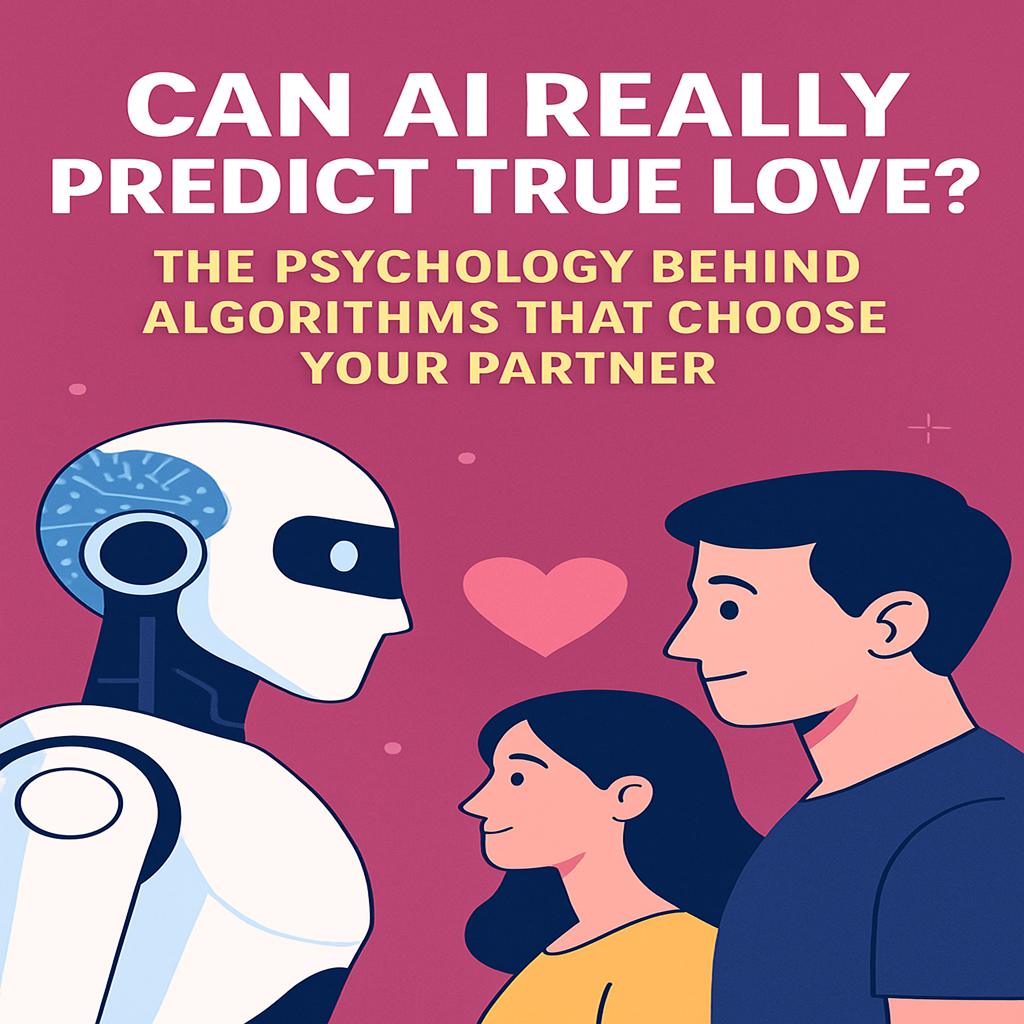
The Algorithm of Love: Can AI Pick Your Perfect Partner?
In today's hyper-connected world, finding love often begins with a swipe, a profile, or a recommendation from a dating app. Artificial intelligence and data science are changing how people discover potential partners, evaluate compatibility, and begin romantic conversations. These tools can make it easier to meet people beyond familiar social circles, but they also raise an important question: can an algorithm really identify the right partner, or does lasting love require qualities that data cannot fully capture?
Romantic attraction involves personality, shared values, emotional needs, life circumstances, communication, and personal experiences. AI can analyze selected information and identify patterns, but a promising prediction is not the same as a successful relationship. Understanding both the capabilities and limitations of AI matchmaking can help people use technology without handing over their personal judgment.
The Psychology of Attraction: What Makes Us Click?
Attraction is influenced by a combination of psychological, social, emotional, and situational factors. People may feel drawn to others who share their interests or values, make them feel understood, or communicate in ways that create trust. Familiarity and repeated positive interaction can also influence how relationships develop.
Psychologists study several processes that can contribute to attraction:
- Similarity: Shared values, interests, and expectations may make everyday decisions and communication easier.
- Reciprocity: Knowing that interest is mutual can encourage people to become more open and engaged.
- Proximity and familiarity: Repeated contact may create opportunities for trust and connection to grow.
- Attachment patterns: Past relationship experiences can influence how people respond to closeness, conflict, and reassurance.
- Life goals: Expectations about family, career, finances, location, and commitment can affect long-term compatibility.
These influences do not create a universal formula for love. Two people may have similar personalities yet struggle with communication, while people with different interests may build a strong relationship through respect and cooperation. AI matchmaking is most useful when it helps people explore compatibility rather than treating a score as a final verdict.
How AI Learns Patterns in Dating
AI systems can analyze information such as profile preferences, stated interests, location, interaction patterns, and feedback. Depending on the platform, machine-learning models may use these signals to recommend profiles or predict which users are likely to engage with one another.
For example, if users consistently interact with profiles that share certain stated preferences, a recommendation system may learn to prioritize similar profiles. Some systems also use questionnaire responses or compatibility models to compare values, habits, and relationship expectations.
However, these predictions depend on the information available and the objective the system is designed to optimize. A platform may be particularly good at predicting clicks or messages without being able to predict trust, emotional safety, commitment, or long-term satisfaction. The system may know what captures attention without knowing what will help two people build a healthy life together.
The Evolution of Dating Platforms
1. Profile-Based Dating
Early online dating platforms largely relied on personal profiles, photographs, written descriptions, and user-selected preferences. These tools expanded opportunities to meet people, but users still had to evaluate compatibility through conversation and experience. A carefully written profile could provide useful information, yet it could not reveal every aspect of someone's character.
2. Recommendation-Based Matching
As dating apps developed, recommendation systems began using user preferences and platform activity to rank or suggest profiles. These features can reduce the time spent searching, but recommendations may also be shaped by incomplete data and engagement-focused design. A profile appearing frequently does not necessarily mean that the person is the best possible partner.
3. AI-Assisted Dating
Newer AI tools can assist with profile writing, conversation suggestions, preference analysis, and relationship-related information. Their usefulness depends on transparency, privacy, accuracy, and the extent to which users retain control over their choices. AI-generated messages can help someone overcome nervousness, but authentic communication still matters because a relationship must eventually reflect the real people involved.
Can AI Measure Emotional Compatibility?
Compatibility is more complex than matching hobbies or assigning two people a numerical score. Emotional compatibility may involve how partners communicate under stress, handle disagreement, respect boundaries, share responsibilities, and repair misunderstandings. Some of these qualities become visible only over time.
An algorithm may compare answers to questions about lifestyle or values, but it cannot reliably determine every future interaction. People change, circumstances shift, and even partners with similar goals may disagree about how to achieve them. Conversely, differences do not automatically make a relationship unsuitable if both people can communicate respectfully and negotiate practical solutions.
A useful way to approach compatibility scores is to treat them as conversation starters. Ask what the score measures, what information it leaves out, and whether the recommendation reflects your own priorities. For more on how human behavior influences financial decisions and risk, explore the psychology behind trading decisions.
The Benefits of AI in Modern Relationships
- Wider opportunities: Digital matchmaking can introduce people beyond their existing social circles.
- Preference discovery: Questionnaires may help users clarify what they value in a partner.
- Reduced search effort: Recommendations can organize large numbers of profiles into a more manageable selection.
- Communication support: AI tools may help users brainstorm respectful conversation starters or express thoughts more clearly.
- Accessibility: Online platforms can offer additional ways to meet people for those whose work, location, or circumstances limit in-person opportunities.
These benefits depend on how a platform operates and how people use it. They do not guarantee that users will meet a compatible partner, and the quality of recommendations can vary considerably.
The Dark Side: Limitations and Ethical Concerns
Privacy and Sensitive Information
Dating profiles can reveal personal preferences, location, photographs, communication habits, and other sensitive details. Users should understand what information a platform collects, how it may be shared, and what privacy controls are available. Avoid sharing financial details or highly sensitive information with strangers or unverified services.
Bias and Narrow Recommendations
AI systems learn from available data, which may reflect social inequalities or limited representations of different communities. If a system repeatedly favors particular patterns, some users may receive fewer relevant recommendations. Algorithmic output should therefore not be mistaken for an objective measure of someone's desirability or worth.
False Confidence and Unrealistic Expectations
A high compatibility score can create the impression that a relationship is destined to succeed. This can lead people to overlook warning signs or feel disappointed when real-life interactions differ from predictions. No algorithm can guarantee honesty, mutual respect, emotional maturity, or a lasting commitment.
Engagement Versus Wellbeing
Some platforms benefit when users continue browsing and interacting. That commercial incentive may not always align with a user's goal of building a meaningful relationship. If dating apps begin to affect sleep, confidence, or emotional wellbeing, consider setting limits and prioritizing conversations that feel respectful and reciprocal.
Can AI Replace the Human Element of Love?
Love develops through real experiences: listening, showing care, handling disagreements, respecting boundaries, and being accountable for one's actions. AI can help people discover potential matches, but it cannot take responsibility for how two people treat each other.
A healthy relationship requires more than attraction or similar preferences. It depends on trust, consent, reliability, communication, and the ability to address difficulties together. If you want to explore these qualities further, read our guide to building healthier relationships.
The Future of AI and Romantic Relationships
AI-assisted dating may become more personalized, with tools that help users describe preferences, organize conversations, and reflect on relationship patterns. These developments could be useful if they remain transparent and put user wellbeing first. They may also create new concerns about data collection, manipulated profiles, deepfakes, and the difficulty of distinguishing genuine interaction from automated content.
Users can protect their autonomy by checking identities carefully, meeting safely, avoiding pressure to disclose private information, and making important decisions based on real-world behavior rather than algorithmic predictions.
Conclusion: Let AI Guide You, Not Choose for You
AI can make the search for a partner more convenient by organizing information and identifying possible points of compatibility. But a recommendation is only a starting point, not proof that two people will build a fulfilling relationship. Human connection remains shaped by experience, communication, personal growth, shared values, and the choices people make every day.
Use AI as a tool to explore possibilities, not as the final authority on love. Ask thoughtful questions, protect your privacy, and pay attention to how a person behaves over time. The strongest relationships are not simply discovered by an algorithm; they are built through mutual respect, emotional responsibility, and consistent effort.