
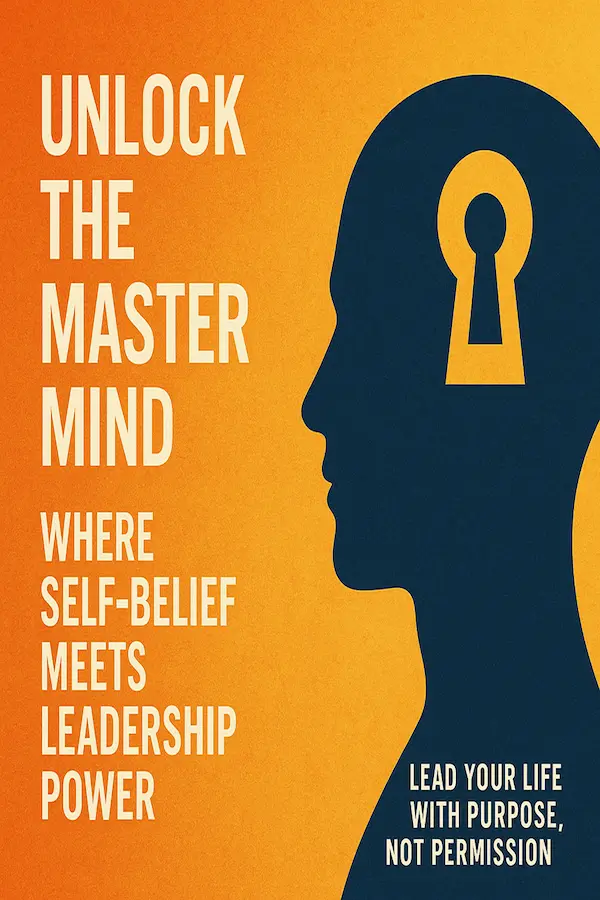
Why do some people take responsibility for their choices while others constantly wait for someone else to lead them? Leadership is often discussed as the ability to influence other people, but an equally important part of leadership begins within the individual.
The idea of the Master Mind can be understood as a self-development concept: developing greater awareness of your thoughts, beliefs, emotions, decisions, and behaviour so that you can lead yourself with greater intention.
In this sense, becoming a Master Mind is not about controlling other people or believing that you are superior to them. It is about developing self-awareness, mental discipline, confidence, responsibility, and a clearer sense of purpose.
What Is the Master Mind?
The term Master Mind is not a formal psychological diagnosis or established clinical construct. In the context of self-development, it can be used to describe a mindset in which a person becomes more conscious of their thoughts, emotions, decisions, and personal direction.
A person developing this mindset does not simply react to every situation automatically. Instead, they begin to pause, observe their responses, consider consequences, and make decisions that are more consistent with their values.
The goal is therefore not perfection. It is greater awareness and responsibility in everyday life.
Mastering Yourself Before Leading Others
Leadership often begins with self-leadership. Before trying to influence a team, relationship, organisation, or community, a person has to learn how to manage their own reactions and choices.
Self-leadership can involve recognising emotional triggers, managing impulses, maintaining personal boundaries, following through on commitments, and taking responsibility for mistakes.
This does not mean suppressing emotions. Emotional awareness means recognising what you feel and understanding how that feeling may influence your behaviour. The ability to pause before reacting can create more space for thoughtful decisions.
The Master Mind and Self-Awareness
Self-awareness is one of the foundations of personal growth. Without awareness, a person may repeat the same behaviours without understanding why they keep producing similar results.
Developing self-awareness means becoming curious about your own patterns. You may begin asking questions such as: What situations trigger me? Why do I avoid certain responsibilities? Which beliefs influence my decisions? What do I do when I feel rejected, criticised, or uncertain?
These questions can help a person move from automatic reaction toward conscious reflection.
If you want to explore this process further, our The Subconscious Mind article discusses how learned patterns, beliefs, habits, and automatic mental processes can influence thoughts and behaviour.
The Master Mind and Mental Discipline
Mental discipline does not mean forcing yourself to think positively all the time. It means developing the ability to direct your attention and behaviour toward what is constructive and within your control.
A mentally disciplined person can still experience fear, doubt, frustration, or disappointment. The difference is that these emotions do not necessarily have to determine every decision.
- Pause before reacting: Give yourself time to understand a situation before responding emotionally.
- Focus on what you can control: Separate your own actions from circumstances controlled by other people.
- Follow through: Build trust in yourself by taking reasonable action on your commitments.
- Learn from mistakes: Treat setbacks as information that can help you adjust your behaviour.
- Protect your attention: Avoid allowing every distraction, opinion, or emotional reaction to control your priorities.
Confidence Without Arrogance
Confidence is another important part of self-leadership. Healthy confidence does not require believing that you are better than everyone else. It involves having enough trust in your ability to make decisions, learn, adapt, and recover from mistakes.
There is also an important difference between confidence and arrogance. Confidence can coexist with humility because a confident person can acknowledge what they do not know and remain open to learning.
A developing Master Mind therefore does not seek constant approval or validation. It learns to consider feedback without allowing every outside opinion to define personal worth.
The Master Mind and Emotional Intelligence
Emotional intelligence involves recognising and understanding emotions and using that awareness to respond more effectively to situations and relationships.
When emotional awareness increases, a person may become better able to recognise patterns such as anger leading to impulsive decisions, fear leading to avoidance, or insecurity leading to excessive reassurance-seeking.
Instead of asking only, "What am I feeling?", self-awareness can also lead to a second question: "What is this emotion encouraging me to do, and is that response actually helpful?"
The Master Mind and Purpose
A strong mindset becomes more meaningful when it is connected to a clear sense of direction. Without purpose, discipline can become a constant struggle to remain productive without knowing why the effort matters.
Understanding your values, interests, responsibilities, and long-term priorities can help create a clearer personal direction.
If you are exploring this aspect of self-development, read The Life Purpose for a deeper discussion of purpose, self-awareness, and personal direction.
Beliefs, Thoughts and Behaviour
The way people interpret situations can influence how they respond to them. A person who interprets every mistake as proof of personal failure may react very differently from someone who sees the same mistake as an opportunity to learn.
This does not mean that changing a thought automatically changes external reality. Rather, becoming aware of interpretations and beliefs can create an opportunity to respond differently.
Personal growth therefore involves examining beliefs rather than automatically accepting every thought as a fact.
The Master Mind and Personal Responsibility
Personal responsibility is not the same as blaming yourself for everything that happens. Many circumstances are influenced by other people, social conditions, unexpected events, and factors outside individual control.
Responsibility means recognising the part that belongs to you: your choices, boundaries, communication, habits, and response to circumstances.
This shift can be powerful because it moves attention away from constant blame and toward practical action.
How to Develop a Master Mind
Developing this mindset is not a one-time transformation. It is a gradual process of observing yourself, making intentional choices, learning from experience, and adjusting your behaviour.
- Know yourself: Identify your strengths, limitations, emotional triggers, and recurring patterns.
- Clarify your values: Decide which principles are important enough to guide your choices.
- Set meaningful goals: Choose goals that are connected to your priorities rather than simply following other people's expectations.
- Develop emotional awareness: Notice your emotions without allowing every emotion to dictate your actions.
- Build consistent habits: Small repeated behaviours can gradually create stronger patterns of action.
- Review your decisions: Reflect on what worked, what did not, and what you can learn from the experience.
- Remain open to learning: A strong mindset does not mean believing you already know everything.
Leadership Begins With Self-Development
The ability to lead yourself is closely connected with personal development. Developing self-awareness, emotional maturity, communication skills, confidence, and healthy habits can gradually change the way you approach challenges.
Our Self-Development section explores broader areas of personal growth, self-awareness, lifestyle, emotional wellbeing, and inner development.
The Master Mind and Spiritual Reflection
For some people, personal development also has a spiritual dimension. Faith, prayer, reflection, and a sense of connection with something greater than oneself may provide a framework through which people understand their values and purpose.
Spiritual belief, however, should not be presented as a guaranteed psychological or material outcome. A person's faith may provide meaning and guidance, while practical decisions and actions still remain important in everyday life.
The idea of a Master Mind can therefore be understood as bringing inner awareness, values, responsibility, and purposeful action into greater alignment.
What the Master Mind Does Not Mean
Becoming mentally stronger does not mean controlling other people, eliminating every negative emotion, or guaranteeing success in every situation.
Personal development also cannot remove every external difficulty. Life contains uncertainty, loss, setbacks, relationship problems, and circumstances that are outside individual control.
A healthier understanding of self-mastery is therefore not "I can control everything," but rather "I can become more aware of myself and choose how I respond to what is within my influence."
Final Thoughts
The Master Mind can be viewed as a self-development framework centred on self-awareness, mental discipline, emotional intelligence, confidence, responsibility, and purposeful action.
True leadership does not begin with controlling others. It begins with learning to understand yourself, manage your responses, take responsibility for your choices, and continue developing your abilities.
You may not be able to control every circumstance around you, but you can continue to develop greater awareness of your thoughts, values, emotions, and actions. That is where self-leadership begins.